
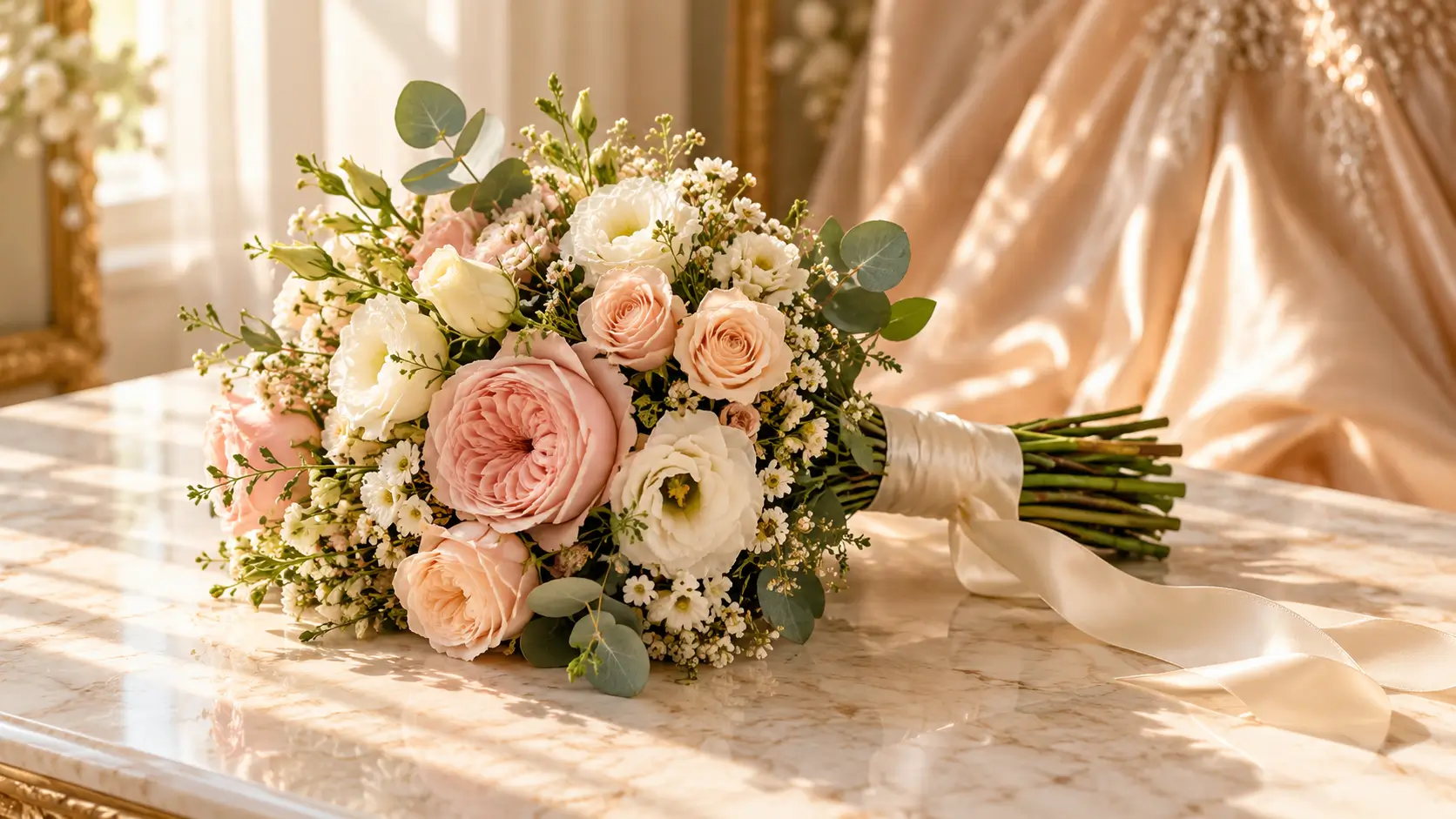
Prom flower bouquet ideas can be romantic, bold, minimal, or completely personal. The right bouquet complements your formal outfit, feels comfortable to carry, and looks beautiful in photographs without hiding your dress. Whether you prefer pink roses, elegant white flowers, or cheerful seasonal blooms, these 15 looks will help you choose colors, size, wrapping, and finishing details with confidence.
Table of Contents
Quick Answer: What Makes a Great Prom Bouquet?
The best prom bouquet is small or medium-sized, lightweight, fresh, and coordinated with your outfit. Roses, spray roses, lisianthus, carnations, and seasonal flowers are flexible choices. Choose one or two main colors, ask for neatly secured stems, and avoid an arrangement so large that it covers the dress or becomes tiring to carry.
15 Prom Flower Bouquet Ideas for Every Style
Use these ideas as inspiration rather than a rigid shopping list. Availability, local florist pricing, and your personal style matter more than matching any one photograph.
1. Romantic Pink Rose Bouquet
Blush roses paired with ivory lisianthus and a narrow satin ribbon make an elegant option for champagne, cream, or pastel dresses. Use several rose sizes for texture, and keep the bouquet compact enough to hold in one hand. A few small white blooms add lightness without distracting from the roses.
2. Classic White Rose Bouquet
White roses and restrained greenery create a clean, sophisticated look with black, navy, emerald, or burgundy outfits. Choose fresh roses at slightly different opening stages for natural variation. An ivory ribbon suits formal dresses while a sage ribbon introduces subtle color.
3. Bold Red Rose Bouquet
Rich red roses offer a dramatic contrast against black, ivory, and champagne-colored dresses. For a less traditional look, mix in two or three white lisianthus blooms, as seen in high-contrast floral styling. Avoid heavy wrapping that makes the small arrangement look oversized.
4. Dreamy Lavender and Purple Bouquet
Lavender lisianthus, purple seasonal flowers, and soft green foliage pair beautifully with silver, lilac, or cool-toned blue fabrics. Vary flower sizes rather than packing every stem at the same height. Request sturdy flower varieties if you expect a long outdoor photo session.
5. Delicate Baby’s Breath Bouquet
A small, cloud-like arrangement of baby’s breath can be striking when tied with a simple satin ribbon. Keep the shape rounded and tidy, or include a couple of miniature roses for a hint of color. It is a useful choice when you prefer lightweight flowers and understated accessories.
6. Wildflower-Inspired Prom Bouquet
Seasonal daisies, small spray roses, and airy greenery offer a relaxed spring-garden feeling. Select just two or three coordinating hues—such as peach, yellow, and white—to keep the result intentional rather than chaotic. This style complements floral-print dresses and outdoor photos.
7. Peach and Champagne Flowers
Combine peach spray roses, pale cream carnations, and ivory lisianthus for a warm palette that suits gold, champagne, and beige outfits. A neutral ribbon completes the look. Ask your florist to compare the flowers against a photograph of your dress in natural daylight.
8. Modern Monochromatic Arrangement
Build a bouquet around several shades of one hue, such as pale pink, dusty rose, and rich mauve. The depth comes from different textures and petal shapes, not additional colors. This is a polished approach for minimal gowns or outfits with detailed beading.
9. Mini Peony Bouquet
Three to five generous peony blooms, supported by smaller flowers, can make a lush but portable bouquet. Ask whether buds will be open on the day of prom: peonies vary in size as they bloom and may be seasonal or costly. See our peony bouquet ideas for more combinations.
10. Hot Pink Statement Flowers
Vivid pink roses or carnations make a playful focal point against black, white, or silver dresses. Keep the stems neatly bound and limit greenery so the saturated color stands out. If the dress is already brightly colored, use a slightly smaller bouquet to preserve balance.
11. White Flowers with Eucalyptus
White roses and lisianthus framed with a little eucalyptus create a fresh, contemporary look. Have the florist trim loose branches so nothing catches on your dress. Sage, olive, cream, and black outfits all work well with the restrained green-and-white palette.
12. Sunflower-Inspired Bouquet
A small sunflower or two can add a cheerful yellow focal point to blue, navy, and white outfits. Pair it with white seasonal flowers rather than competing large blooms. Because sunflower heads can be heavy, test the finished bouquet’s weight before choosing it for a long event.
13. Blue and White Florals
Naturally blue accents—such as suitable shorter delphinium stems—can contrast beautifully with white roses or lisianthus. Blue varieties may be harder to source, so ask about availability early. Keep delicate tall flower spikes supported inside a compact hand-held arrangement.
14. Vintage Garden Rose Bouquet
Dusty pink garden roses with ivory accents give a softly layered, romantic feel. Combine slightly varied bloom shapes and a loosely rounded silhouette, but tie the stems securely for carrying. This complements lace, classic satin, and vintage-inspired prom outfits.
15. Personalized Ribbon Bouquet
Choose your favorite flower combination, then personalize the finishing ribbon with a school-color accent or small lightweight charm. The accessories should be securely attached, never sharp or heavy. A meaningful detail often makes a simple bouquet feel especially memorable in photos.
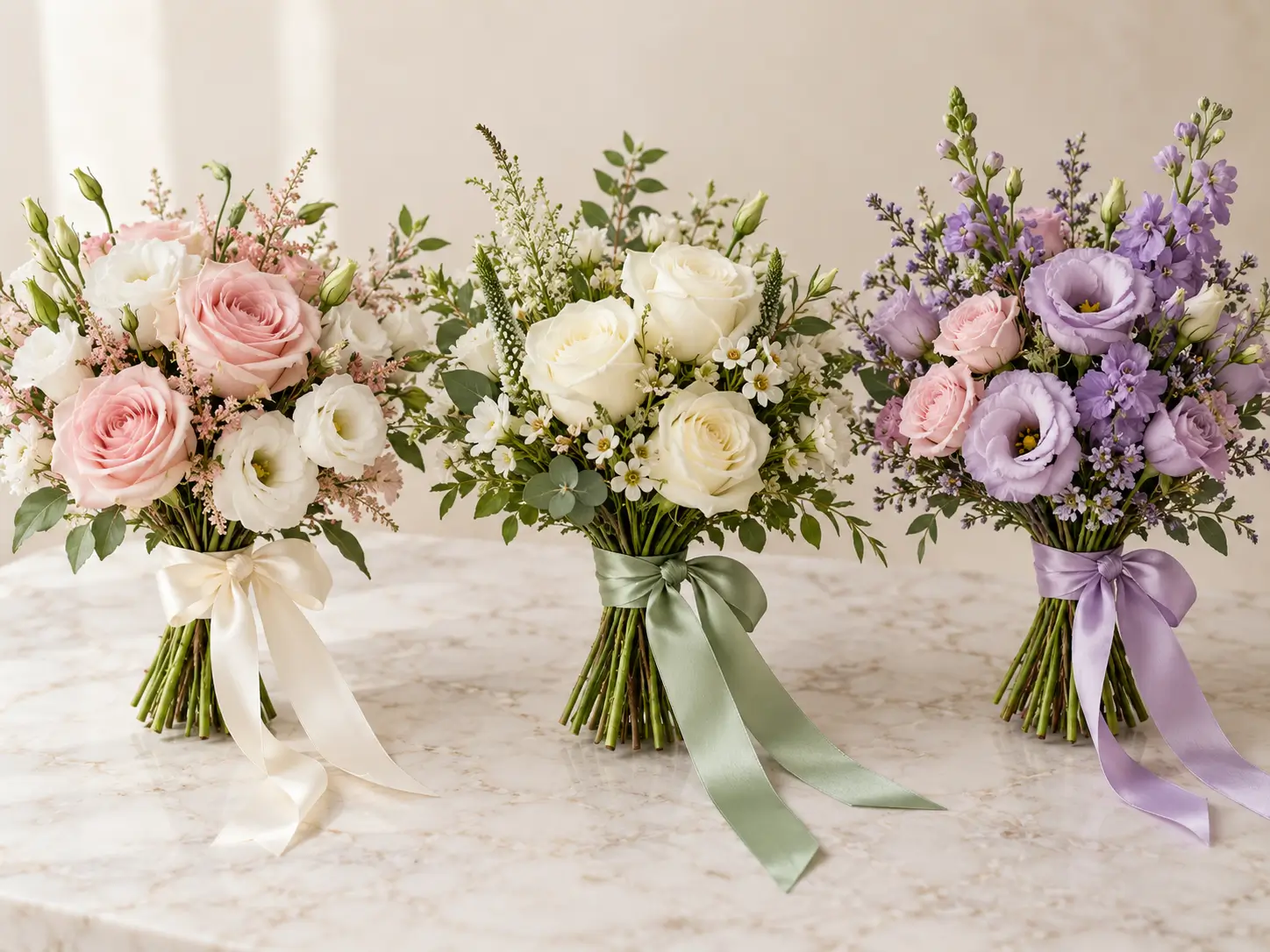
How to Match Your Prom Bouquet to Your Dress
Start with the dress color and its overall level of detail. A simple solid-color dress can support stronger floral contrast, while sequins, lace, or prominent embroidery often work best with a smaller, calmer arrangement. Matching the exact fabric shade is optional; complementary colors can photograph better than a forced perfect match.
| Dress Color | Flower Colors to Try | Effect |
|---|---|---|
| Black | Red, white, blush pink | Classic contrast |
| Navy blue | White, peach, soft blue | Cool and polished |
| Burgundy | Cream, blush, dusty rose | Romantic |
| Emerald green | Ivory, white, champagne | Elegant |
| Light pink | White, lavender, dusty pink | Soft and airy |
| Gold or champagne | Peach, cream, pale pink | Warm and refined |
| Silver | White, lavender, pale blue | Fresh and modern |
| Royal blue | White, yellow, peach | Bright contrast |
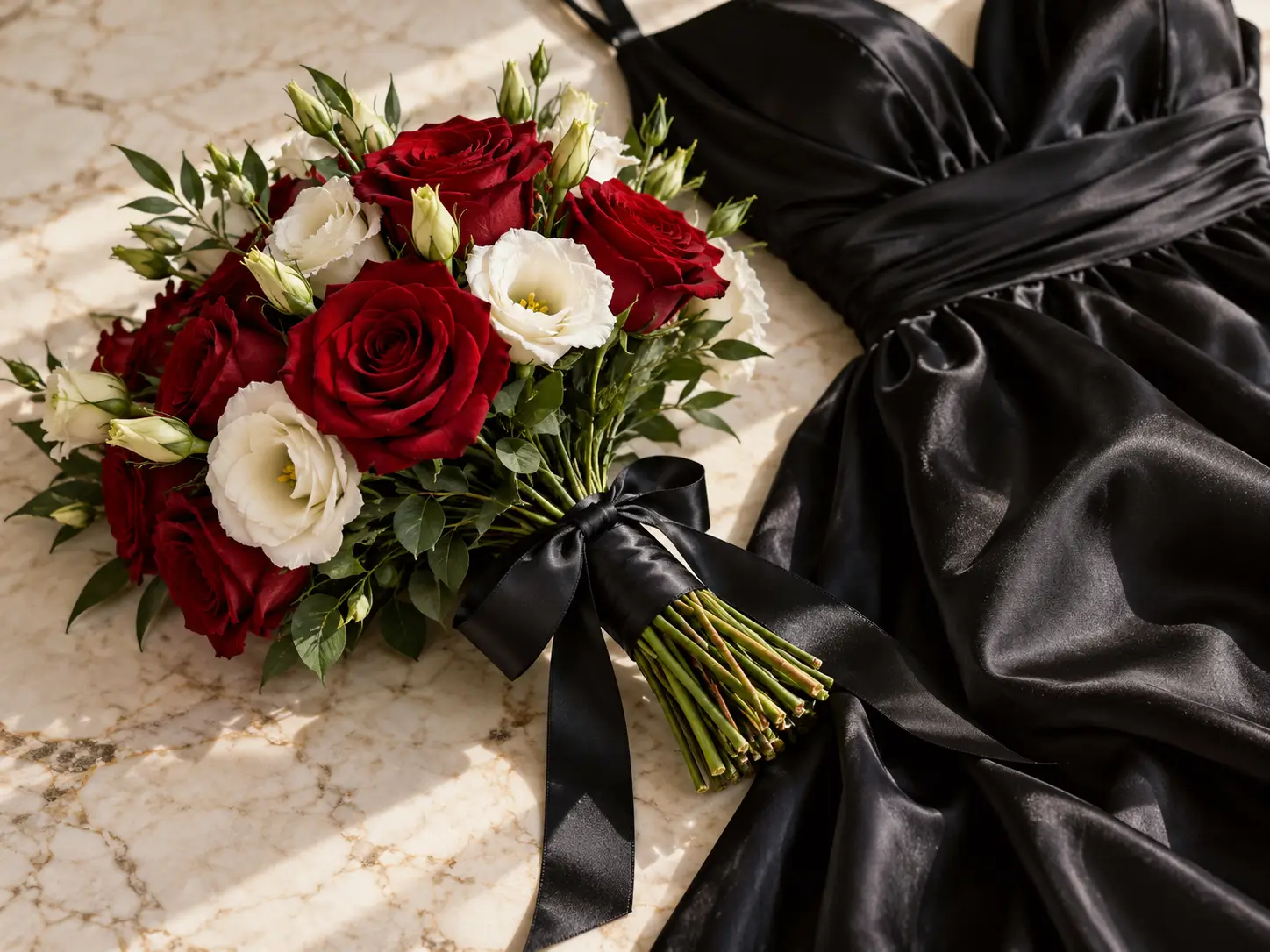
Think about the location, too. Soft colors can look beautiful in morning or late-afternoon light, whereas deep red flowers may provide stronger contrast against black clothing. If you are unsure which rose shade to choose, our rose colors meaning guide explains common associations without treating them as universal rules.
Prom Bouquets vs. Corsages: Which Should You Choose?
A hand-held bouquet is an attractive photo accessory; a wrist corsage is easier if you want your hands free for most of the event. Boutonnieres provide another wearable floral option. These are preferences, not requirements, and conventions differ by school. The University of Illinois 4-H floral design project covers design principles and wearable flowers, including corsages and boutonnieres.
How Big Should a Prom Flower Bouquet Be?
For most students, a petite or small bouquet is the easiest size to hold in photos, especially if you will also carry a phone or bag. Medium arrangements look fuller but add weight. Large bouquets are dramatic for staged photographs, yet can overwhelm a formal outfit or make transportation awkward.
- Petite: a few focal blooms and delicate accents for minimal styling.
- Small: a compact hand-tied bunch suitable for carrying.
- Medium: more stems and texture for statement pictures.
- Large: best for short photo sessions rather than the entire evening.
Large peonies can create volume with fewer stems than small spray roses. If you are planning a DIY arrangement, use our flower bouquet size and stem-count guide to estimate what you need.
How to Create a Simple DIY Prom Bouquet
Making your own bouquet is a good way to control the colors and ribbon. Start with clean pruning shears, one focal flower variety, a smaller supporting bloom, a little greenery, a suitable floral tie, and satin ribbon. Give yourself time to practice before the event.
- Choose two or three coordinating colors and select fresh, sturdy stems.
- Remove foliage that would sit below water, then trim the stems using clean tools.
- Hold your main roses or other focal blooms together, adding smaller flowers at slight angles.
- Rotate the arrangement as you add greenery so it looks balanced from all sides.
- Secure stems firmly but gently, avoiding crushing tender flower tissue.
- Wrap the binding area with ribbon and place the bouquet in fresh water until departure.
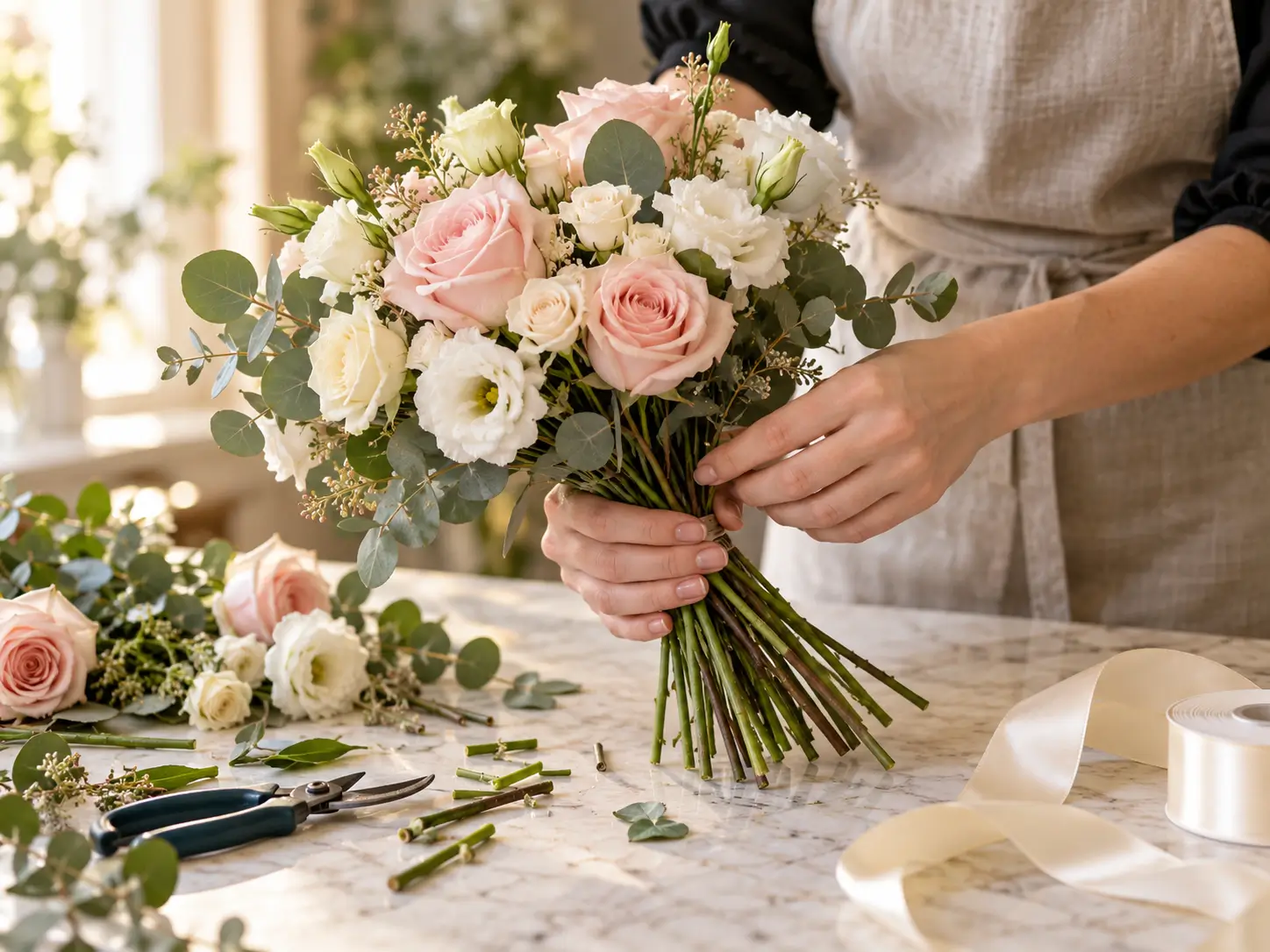
For detailed stem placement and spiral-arranging guidance, follow our step-by-step guide to making a flower bouquet. Remember that a secure and comfortable grip matters more than adding extra flowers.
How to Keep Prom Flowers Fresh
Before prom, stand the bouquet in a clean container with water unless the florist has provided another suitable hydration method. Keep it out of direct sunlight, hot cars, and heating vents. Remove submerged leaves, recut stems when appropriate, and follow flower-food packet instructions. The Penn State Extension guide to caring for fresh cut flowers explains these steps in more detail.
During transportation, secure the arrangement upright if possible and protect the petals from rough surfaces. After the event, return flowers to a clean vase promptly, change cloudy water, and move the display to a cooler room. Different flowers last for different periods, so there is no single guaranteed vase life.
Mistakes to Avoid with Prom Flower Bouquets
- Oversized designs: a heavy bunch can cover your outfit and become tiring to hold.
- Too many colors: limit the palette to keep the dress and bouquet coordinated.
- Fragile stems: avoid unsupported flowers that may wilt or break during outdoor photographs.
- Last-minute orders: availability and special-color requests vary by florist.
- Loose accessories: ribbons and decorative charms should not snag delicate clothing.
- No water plan: arrange a way to keep flowers hydrated before and after photos.
Frequently Asked Questions
What flowers are best for a prom bouquet?
Roses, carnations, spray roses, and lisianthus are versatile options. Choose by color, freshness, weight, season, and local availability rather than by flower name alone.
Do you bring a bouquet to prom?
Some students bring bouquets for photographs, while others choose corsages, boutonnieres, or no flowers. There is no universal requirement.
What bouquet works with a black prom dress?
Red and white flowers create bold contrast. Blush pink, ivory, or champagne flowers give a softer, classic appearance.
How much does a prom flower bouquet cost?
Prices vary with size, flower type, season, florist labor, and location. Ask for a complete local quote and consider seasonal flowers for a tighter budget.
Can I make a prom bouquet myself?
Yes. Start with a small number of sturdy blooms, greenery, clean shears, a secure tie, and ribbon. Make a practice arrangement before the event.
Should a bouquet match a date’s boutonniere?
Matching is optional. You can coordinate a single color, flower variety, or ribbon accent without making both pieces identical.
Final Thoughts: Find a Prom Bouquet You’ll Love
The best prom flower bouquet ideas are not necessarily the most expensive. Choose a manageable arrangement that highlights your outfit, makes you feel confident, and suits the photographs and celebrations you have planned. Whether you choose a romantic blush bouquet or bold red flowers, thoughtful colors and fresh blooms make the difference.