
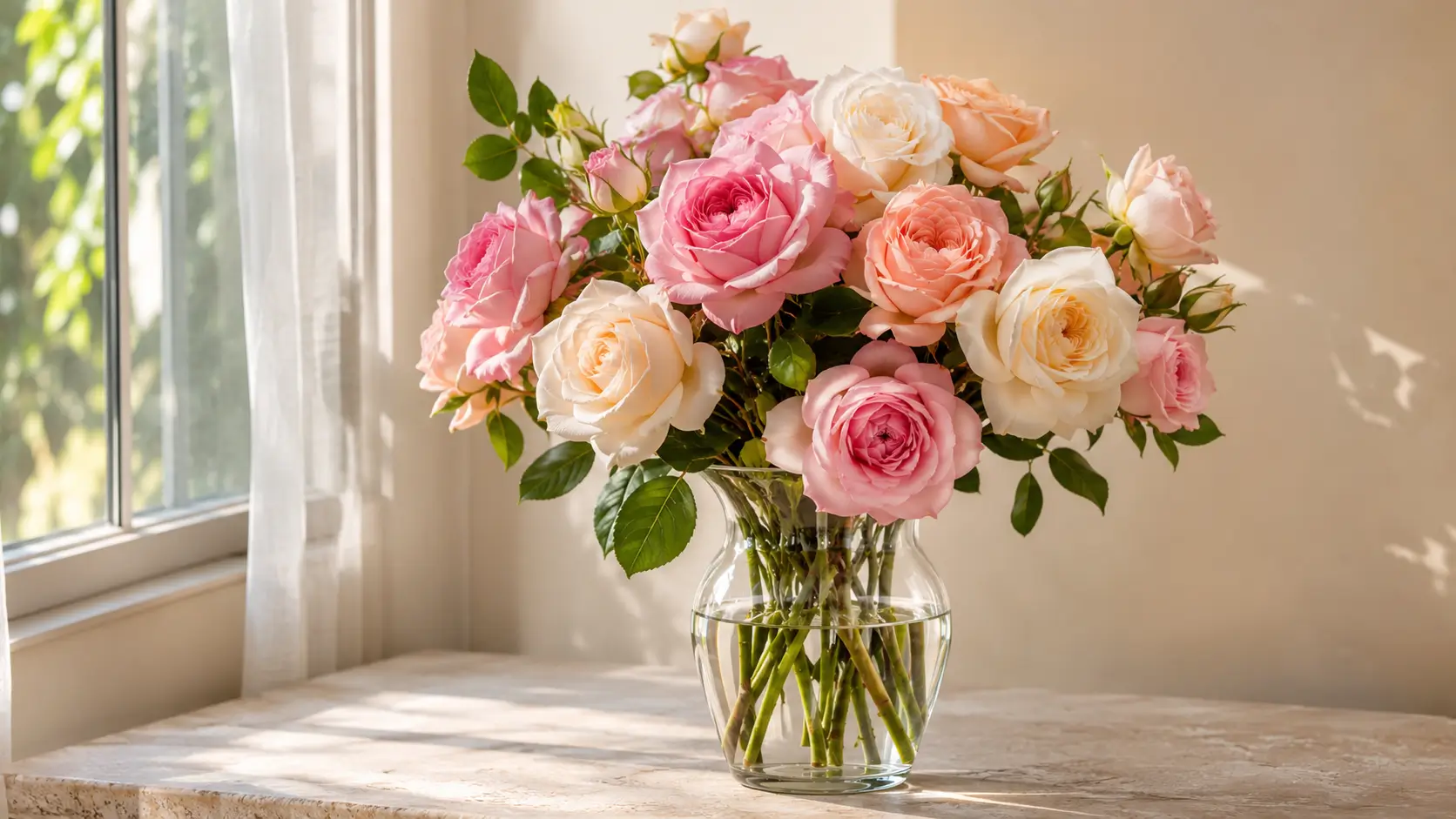
How long do roses last? Most fresh-cut roses last about 3–10 days in a vase when they are fresh and cared for properly.
Their actual vase life depends on the variety, how long ago they were cut, handling during transport, clean water, and the temperature where they are displayed.
This guide compares common rose-lifespan situations and explains how to care for roses, spot early wilting, and choose a fresher bouquet.
If you are asking how long do roses last, the answer depends on freshness, variety, and care. This guide also explains how long roses last in a vase, what happens when cut roses are left without water, and what to do when their heads begin to droop.
Quick answer: Fresh-cut roses usually last about 3–10 days in a vase. Their vase life depends on the variety, freshness when purchased, clean water, temperature, and flower care. There is no reliable fixed number of hours that applies to every bouquet left without water.
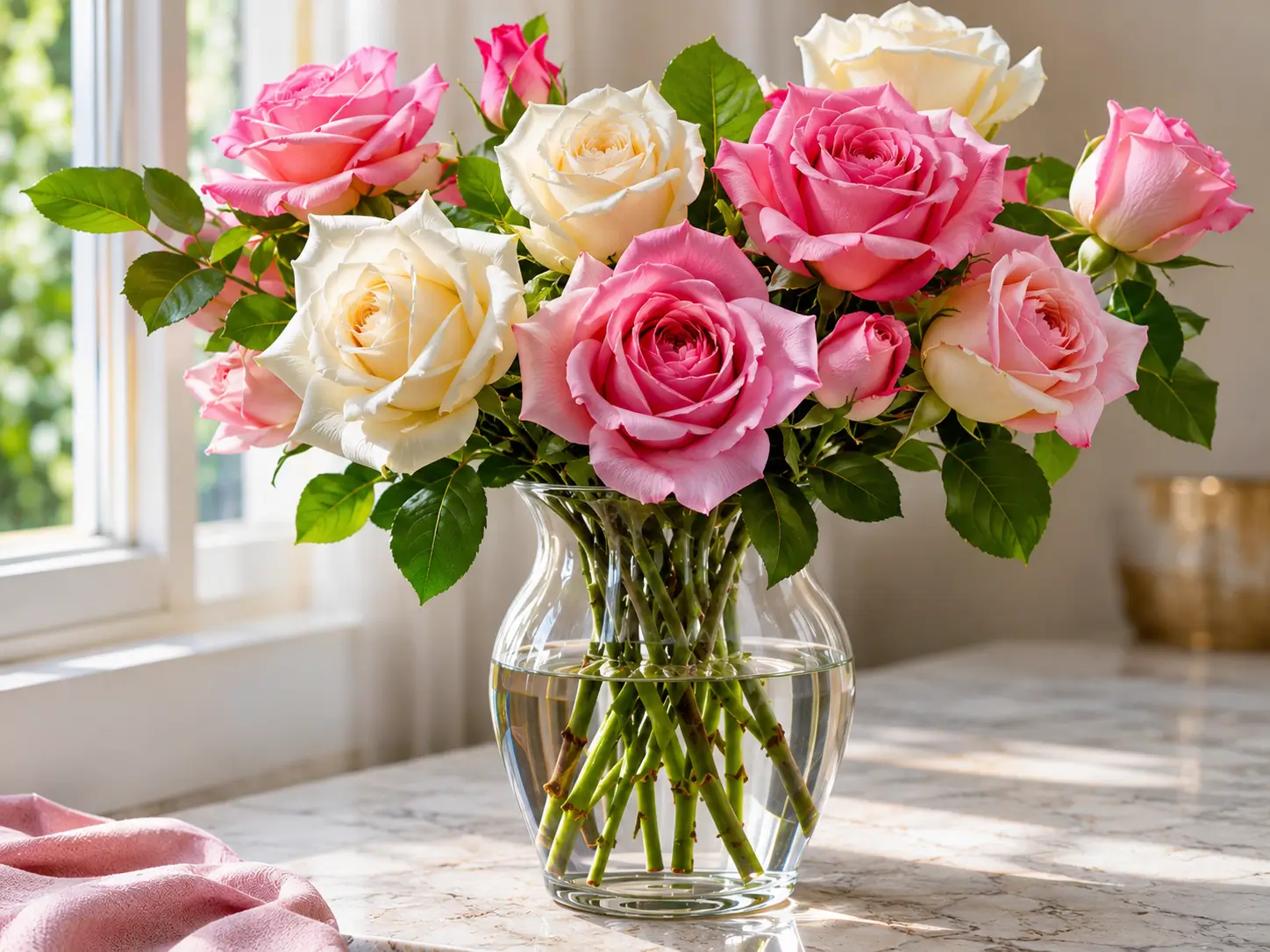
How Long Do Cut Roses Last? A Quick Comparison
The lifespan of roses varies depending on their condition and environment. The following table provides a practical overview.
| Situation | Expected Lifespan | Important Factors |
|---|---|---|
| Fresh-cut roses in a vase | Approximately 3–10 days | Variety, freshness, water, and care |
| Well-handled commercial roses | Around 10 days or sometimes longer | Cultivar and professional postharvest handling |
| Roses without water | No reliable universal time limit | Temperature, humidity, packaging, and time since cutting |
| Wrapped rose bouquet | Depends on whether stems have a water source | Packaging and transport conditions |
| Preserved roses | Often much longer than fresh-cut roses | Preservation method and supplier instructions |
These are general expectations, not guarantees. Purdue Extension reports that most roses can remain fresh for approximately 3–7 days under suitable display conditions, while UC Davis notes that properly handled commercial roses can last around 10 days in a vase.
How Long Do Roses Last in a Vase?
Most fresh-cut roses last approximately 3–10 days in a vase. This is the typical rose vase life range, although some varieties may remain attractive beyond this period while others begin wilting much sooner.
The difference often comes down to the journey from the grower to your home. A rose may have been cut several days before you purchase it. During harvesting, storage, shipping, and display, its stems and petals experience changes that affect how well it can absorb water and maintain freshness.
What Affects the Vase Life of Roses?
- Rose variety: Some cultivars naturally have a longer vase life than others.
- Freshness at purchase: Roses that have already begun wilting have less remaining display life.
- Water availability: Cut stems need a continuous supply of clean water.
- Temperature: Warm rooms and direct sunlight can accelerate deterioration.
- Vase cleanliness: Bacteria in dirty containers can interfere with water uptake.
- Flower food: Commercial floral preservatives help provide nutrients and maintain water quality.
A useful distinction is that the vase-life estimate usually describes the period after cutting, not necessarily the number of days remaining after you bring the bouquet home.
What to Check When Your Roses Arrive
- Look for firm stems without slimy or damaged areas.
- Check that the leaves are reasonably green and healthy.
- Avoid flowers with extensively browned or damaged petals.
- Look for upright blooms rather than heavily drooping heads.
- Ask the florist when the roses arrived and how they were stored.
No single visual sign can guarantee how long a rose will last, but these checks can help you avoid buying flowers that are already deteriorating.
How Long Do Roses Last Without Water?
There is no dependable number of hours that applies to every rose bouquet. Roses without water lose moisture after being cut and can begin wilting; warm conditions can make the problem worse. The outcome depends on the temperature, humidity, packaging, variety, and how recently the flowers were harvested.
If you are buying roses for a birthday, anniversary, or special event, it is best to arrange transport so that the flowers spend as little time as possible without hydration. If you are still choosing a color for the occasion, our guide to rose color meanings can help you compare common associations.
During Transport or Before Gifting
- Ask the florist for a bouquet with a water source or suitable hydration packaging.
- Keep the flowers away from direct sunlight.
- Avoid leaving the bouquet in a hot vehicle.
- Keep the stems protected from damage and excessive movement.
- Place the stems in clean water as soon as you reach your destination.
If you are buying flowers well before an event, ask the florist about the best temporary storage method for that particular bouquet.
Can Roses Recover After Being Out of Water?
Sometimes, roses that have started to droop can improve after being rehydrated. However, recovery is not guaranteed.
- Prepare a clean vase with fresh water.
- Remove leaves that would sit below the waterline.
- Use clean, sharp scissors or floral shears to trim the bottom of each stem.
- Place the roses in water immediately.
- Add commercial flower food according to its package instructions.
- Keep the bouquet in a cool location away from direct sunlight and heat.
If the petals are severely damaged or the stems have deteriorated, rehydration may not restore the flowers. For a recently delivered bouquet that wilts unusually quickly, contact the florist and explain how the flowers were handled.
How to Make Roses Last Longer
A few simple habits can help you make roses last longer. The most important principles are clean equipment, fresh water, suitable temperatures, and proper stem preparation.
1. Start With a Clean Vase
Wash your vase thoroughly before adding flowers. Dirt and microorganisms can accumulate inside containers and contribute to poor water quality. A clean vase gives your roses a better starting point. Rinse away all soap residue before filling it with fresh water.
2. Prepare and Trim the Stems
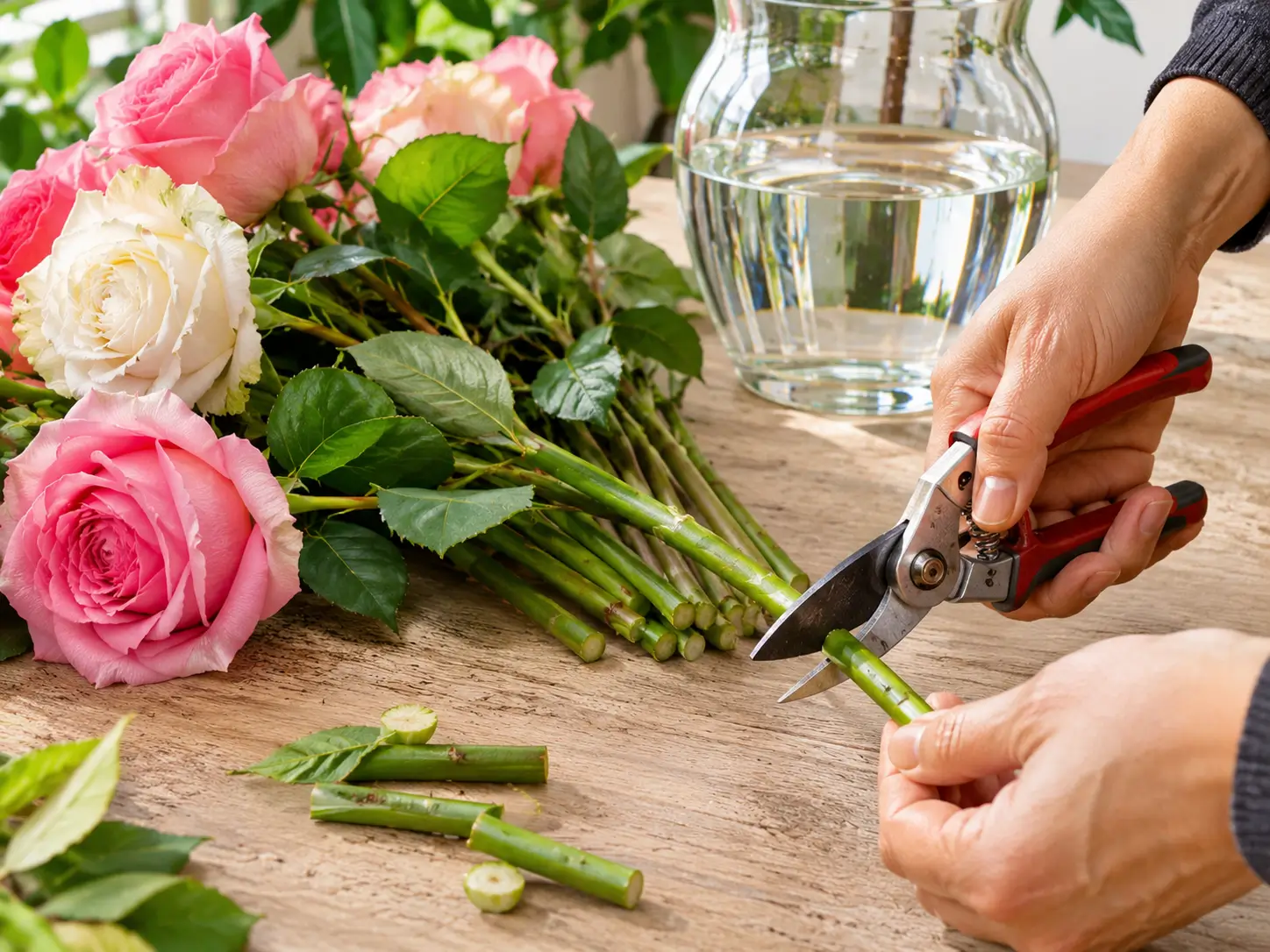
Use sharp, clean scissors, floral shears, or a suitable knife to trim the stems before arranging your roses. Remove approximately one inch from the bottom when preparing the bouquet, then place the stems in water promptly. A fresh cut exposes new tissue that can take up water. Avoid crushing the stems with blunt tools.
3. Remove Leaves Below the Waterline
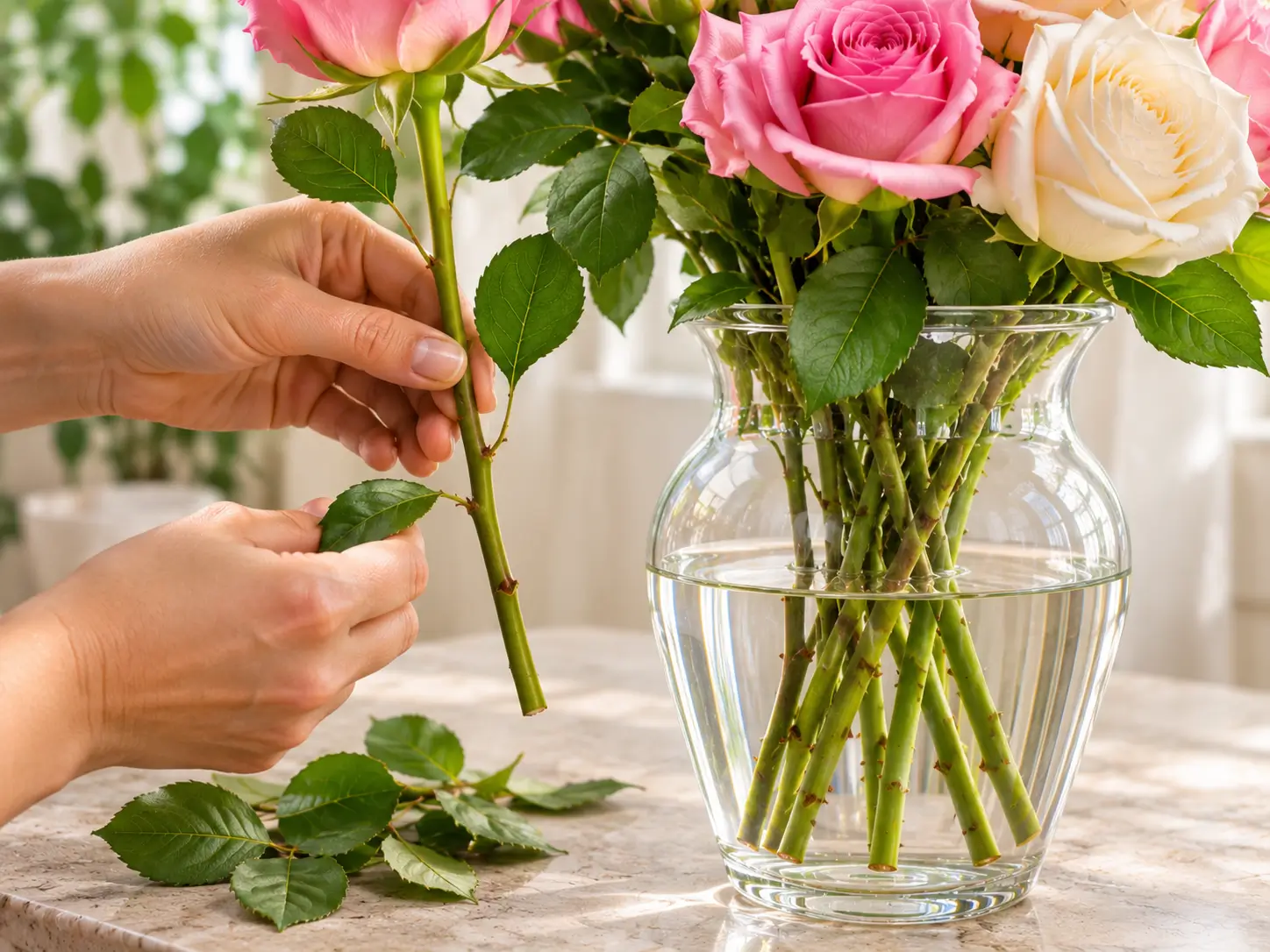
Remove leaves that would otherwise remain submerged in the vase. Submerged foliage can decay and contribute to cloudy water and bacterial growth. Keep the leaves above the waterline whenever possible.
4. Follow the Flower Food Instructions
Use the flower food supplied by your florist or a reputable commercial floral preservative. These products are formulated to provide carbohydrates and help manage microorganisms in the vase water. Always follow the package instructions and use the recommended dilution.
Avoid assuming that household ingredients such as aspirin, pennies, or soft drinks are equivalent to commercial flower food. Iowa State University Extension advises that several popular home remedies do not work as well as proper floral preservatives and may even shorten flower life.
5. Check and Refresh the Water
Check the vase water every day. Top it up when the level becomes low. If the water turns cloudy or develops an unpleasant appearance, replace it with fresh water and clean the vase if necessary.
6. Choose a Suitable Display Location
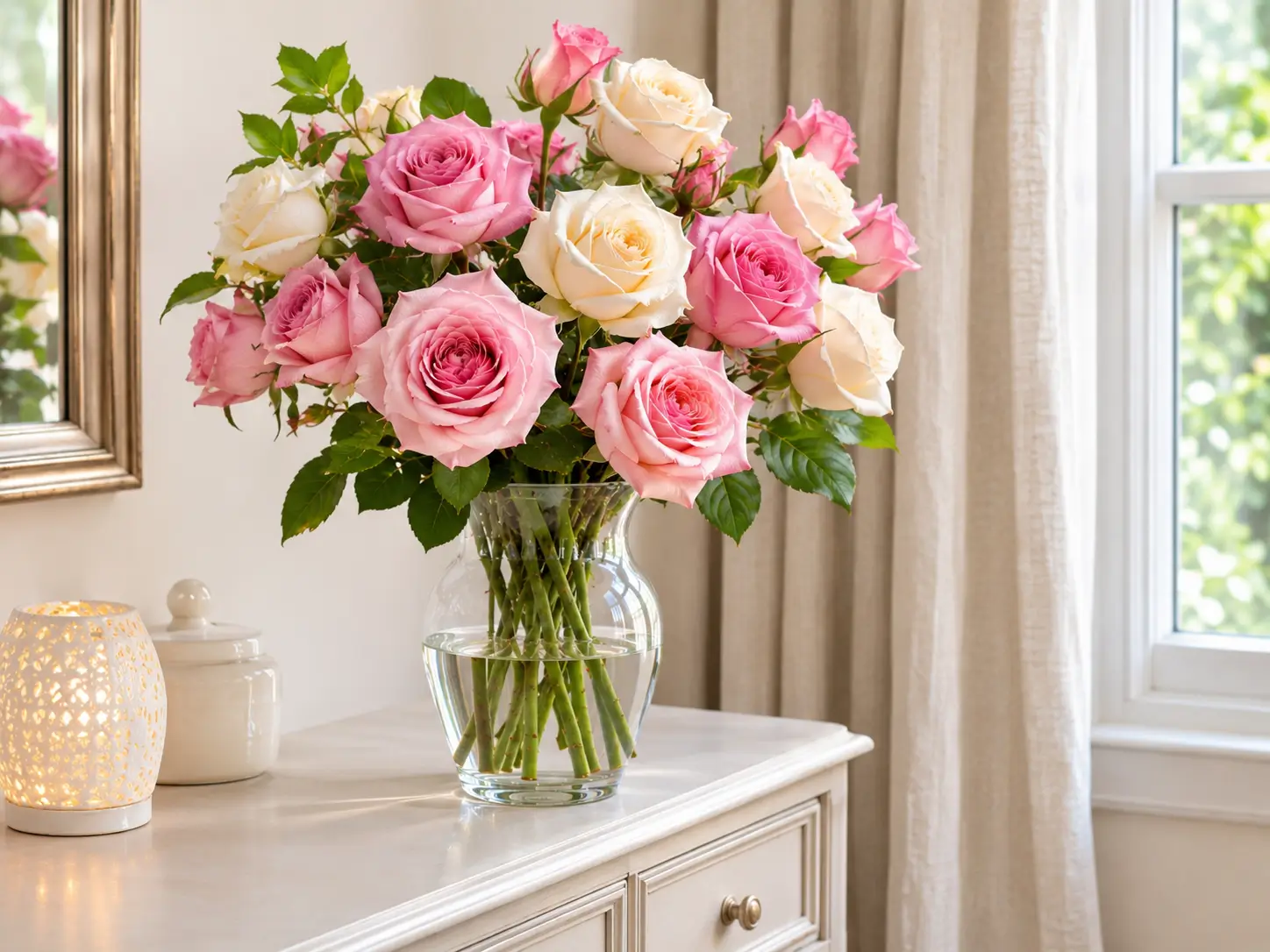
Choose a cool indoor location away from direct sunlight, radiators and other heat sources, heating and cooling vents, strong air currents, and areas that become unusually warm during the day.
Kansas State University recommends keeping flowers in a cool location, around 65–72°F (18–22°C), and away from direct sunlight and heating or cooling vents. For a simple alternative to a traditional vase, see our ideas for flower arrangements in mason jars.
7. Monitor the Bouquet as It Ages
Remove individual flowers that become severely damaged or deteriorate. Check the water level and condition regularly, and keep the arrangement clean. If you replace the water, follow the instructions on your flower food. Some products need to be replenished when fresh water is added.
Why Are My Roses Wilting So Quickly?
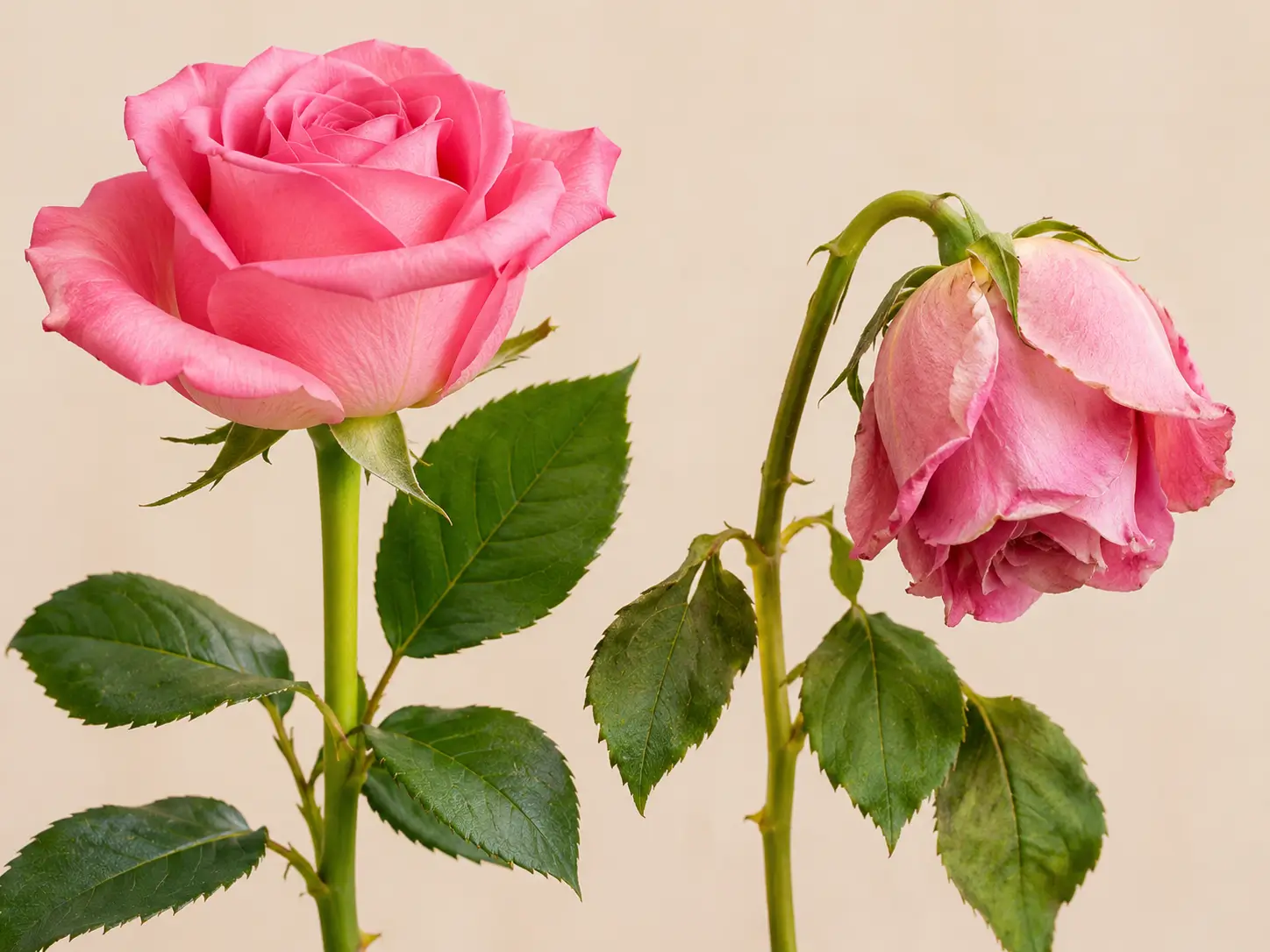
If your roses begin wilting after only a short time, several factors may be responsible. A visible symptom can suggest a problem, but it does not always identify the exact cause.
| What You Notice | Possible Explanation | What to Check or Do |
|---|---|---|
| Drooping flower heads | Poor water uptake or an aging flower | Check the water level and stem condition |
| Dry or browning petal edges | Age, heat, or moisture loss | Move the bouquet to a cooler location |
| Cloudy vase water | Microbial growth or decaying foliage | Replace the water and clean the vase |
| Rapid petal loss | Natural aging or previous handling stress | Remove deteriorating blooms and contact the florist if the bouquet is new |
Why Do Rose Heads Droop?
A drooping rose head is sometimes called bent neck. It can occur when the flower cannot take up enough water through its stem. UC Davis identifies poor water uptake as an important reason that some purchased roses develop this symptom.
Check whether the stems are submerged properly and whether the water is clean. A fresh stem cut and immediate placement in water may help in some cases. However, a severely deteriorated rose may not recover.
How to Choose Roses That Will Last
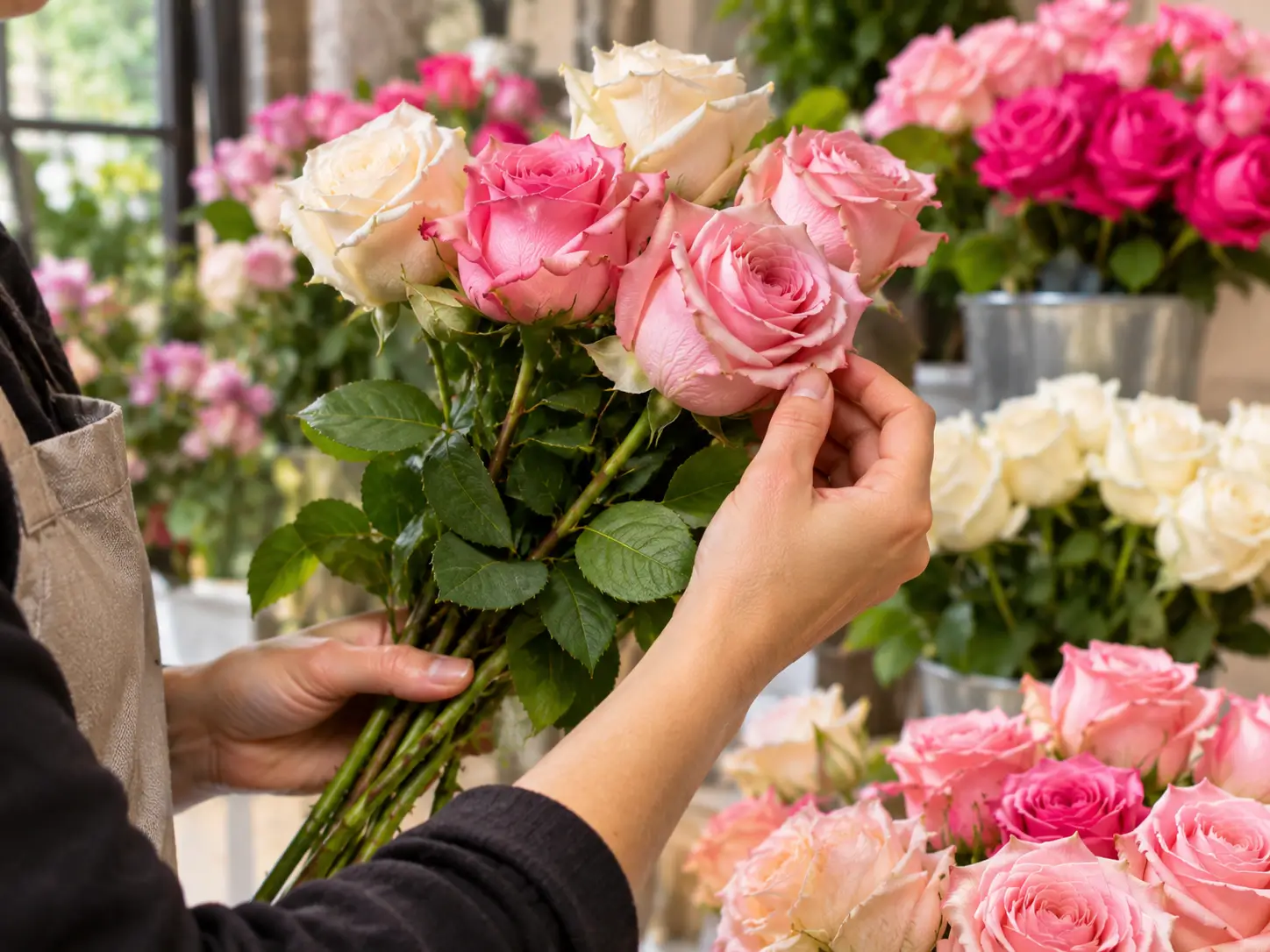
Choosing healthy roses before purchase can help you get more enjoyment from your bouquet. Use this simple checklist when shopping:
- Choose flowers with healthy-looking foliage.
- Look for firm stems without slimy or broken sections.
- Avoid blooms with extensive browning or damaged petals.
- Choose flowers that are just beginning to open if you want to watch them develop.
- Ask the florist when the roses arrived.
- Ask how the flowers have been stored and whether flower food is included.
A photograph of a bouquet can help you evaluate its color and arrangement, but it cannot reliably show how fresh the flowers are or how many days they will last.
If you are planning the size of your arrangement, use our guide to how many flowers you need for a bouquet. If the bouquet is for a particular occasion, tell the florist the date you need it for. They can help you choose flowers and arrange delivery at an appropriate time.
Frequently Asked Questions
How Long Does a Single Rose Last?
A single fresh-cut rose generally has a similar vase-life range to roses in a bouquet: approximately 3–10 days under suitable conditions. Its actual lifespan depends on the variety, freshness, and care.
How Long Do Store-Bought Roses Last?
Store-bought roses can last approximately 3–10 days in a vase, but the remaining lifespan depends on how long they have already been cut and how they were handled before purchase. Choose healthy-looking flowers and place them in clean water as soon as possible.
Can Roses Last Overnight Without Water?
They may remain presentable overnight in some conditions, but there is no universal guarantee. Heat and dry conditions can accelerate wilting. If possible, buy roses with hydration packaging and place them in water as soon as you can.
Does Refrigerating Roses Help Them Last Longer?
Cool storage can help slow deterioration in cut flowers, provided the temperature and conditions are appropriate. Iowa State University Extension recommends cool storage for cut flowers, while also noting that flowers should not be allowed to freeze.
For a home bouquet, a cool room is often a simpler option. If you plan to refrigerate roses, ask your florist for guidance about the appropriate conditions.
Should You Add Sugar or Aspirin to Rose Water?
It is better to use a commercial floral preservative rather than relying on aspirin or other popular household remedies. Iowa State University Extension explains that commercial preservatives are designed to provide nutrients and help maintain water quality. It also cautions that some home remedies can be less effective or may shorten vase life.
How Often Should You Change the Water for Roses?
Check the water every day. Replace it when it becomes cloudy or dirty, and top it up when the level falls. Follow the instructions on your flower food when preparing a fresh solution.
Do Preserved Roses Last Longer Than Fresh Roses?
Yes. Preserved roses are treated differently from fresh-cut flowers and are designed to last much longer without being kept in a vase of water. Their lifespan varies by preservation method, product quality, and storage conditions. Follow the supplier’s care instructions and do not treat preserved roses like fresh-cut flowers.
A Simple Rose Care Checklist
To help your roses stay fresh for as long as possible, remember these five essentials:
- Start with a clean vase.
- Trim the stems with clean, sharp tools.
- Remove leaves below the waterline.
- Use commercial flower food according to its instructions.
- Keep the bouquet in a cool place and check its water daily.
Fresh-cut roses are naturally temporary, but thoughtful care can help you enjoy their color and beauty for longer. Since every bouquet is different, treat lifespan estimates as general guidance rather than a promise.
Enjoy your roses while they bloom, and give them the clean water and attention they need.
Rose Care: Key Facts at a Glance
- Typical vase life: approximately 3–10 days for fresh-cut roses, depending on cultivar and handling.
- Best everyday care: a clean vase, fresh water, trimmed stems, and commercial flower food used as directed.
- Without water: no universal safe time can be promised; keep transport time short and avoid heat.
- When roses wilt: check water quality and stem condition; rehydration may help some flowers but cannot reverse all damage.
These practical points reflect guidance from university extension and postharvest resources, including Purdue University Extension, Kansas State University Extension, Iowa State University Extension, and the UC Davis Postharvest Research and Extension Center.