
DIY Christmas flower arrangements are easy to make at home with fresh flowers, evergreen foliage, a clean waterproof vase and a few festive accents. For a beginner centerpiece, start with 5–7 red roses or carnations, 3–5 greenery stems, fresh water and a ribbon. Arrange the greenery first, add focal blooms at different heights, fill the gaps and check every stem reaches the water.
This guide compares 15 Christmas centerpiece styles and includes practical materials, a complete beginner recipe, approximate budgets, a holiday preparation timeline and flower-care tips. These are illustrative design plans rather than photographs or records of projects personally made by our editorial team.
Quick Guide: Choose a Christmas Flower Arrangement
For a small home or first attempt, use a Mason jar or low vase. These DIY Christmas flower arrangements can be adapted to the space available rather than requiring a professional florist’s centerpiece. Choose low groupings for dinner tables and tall displays for entryways. The following stem counts include foliage and are approximate planning estimates, not universal florist standards.
| Style | Best use | Total stems* | Hands-on estimate |
|---|---|---|---|
| Red rose centerpiece | Dining table | 12–16 | 20–30 min |
| White winter flowers | Living room | 11–15 | 20–30 min |
| Mason jars | Small space | 7–10 | 15–20 min |
| Mini vase | Desk or shelf | 2–4 | 10–15 min |
| Long table groupings | Large dinner | 24–36 | 40–60 min |
| White and gold flowers | Formal table | 16–24 | 35–50 min |
*Stem counts include greenery. Actual quantities depend on vase opening, bloom size and desired fullness. Durations are estimates, not measured outcomes.
What You Need Before Starting
To prepare DIY Christmas flower arrangements, gather fresh roses, carnations or chrysanthemums; identifiable florist-supplied evergreen foliage; a clean waterproof vase; clean pruning shears; commercial cut-flower food; water; and optional ribbon or reusable ornaments. A flower frog or reusable vase grid can help support stems. Choose one focal flower, one supporting flower and one greenery variety if this is your first arrangement.
Never assume a decorative wooden box or unlined pot can safely hold water. Place a stable waterproof vessel inside before adding fresh flowers.
15 DIY Christmas Flower Arrangements
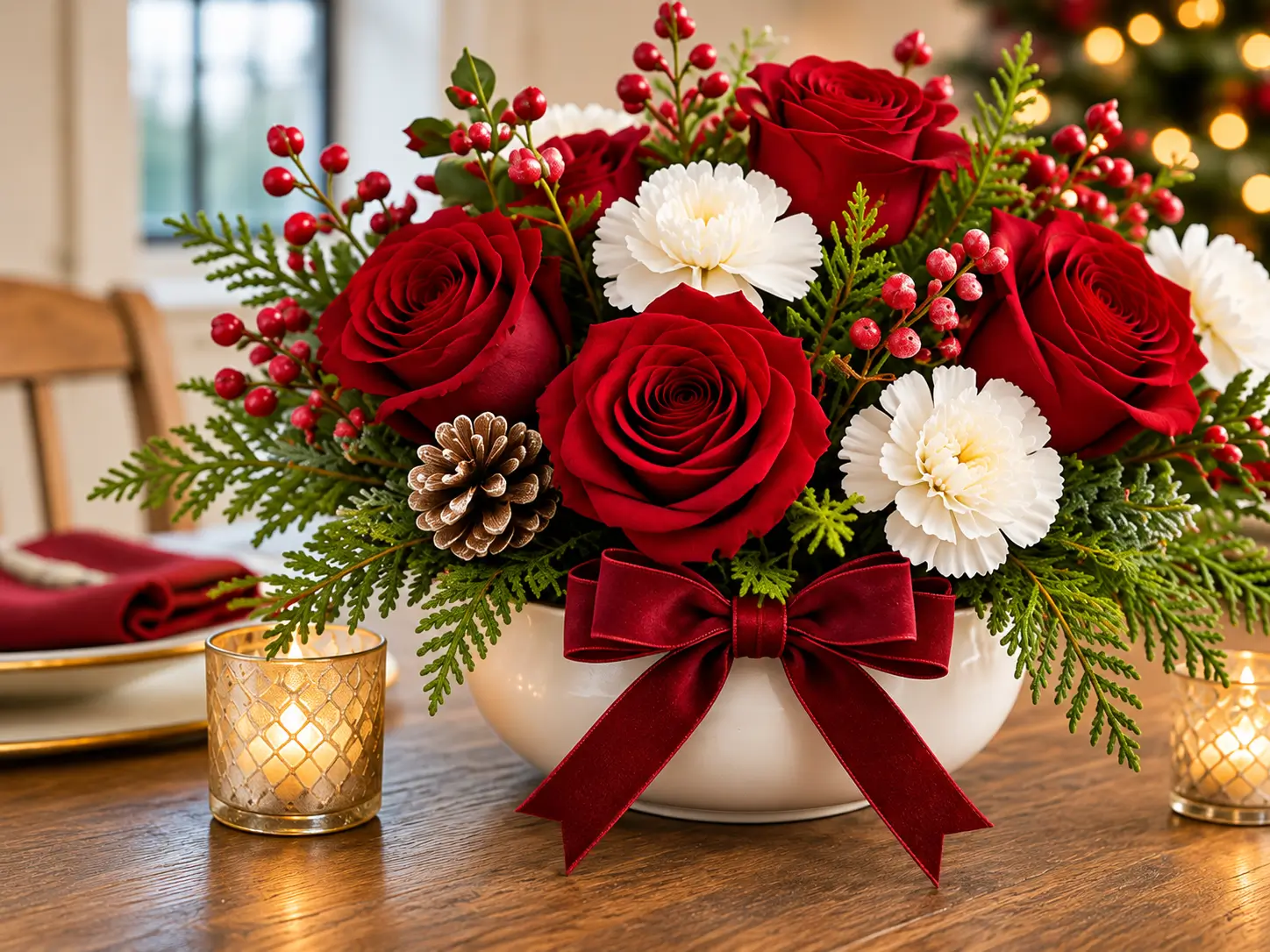
1. Classic Red Rose Christmas Centerpiece
Best for: Traditional Christmas dining tables.
What you need: Six red roses, four red carnations, four cedar stems, a low waterproof vase and burgundy velvet ribbon.
How to arrange: Place cedar around the vase opening to establish a low, broad shape. Put the roses in the center at different heights, fill gaps with carnations, and tie the ribbon around the outside of the container. Keep blooms below seated eye level.
Styling tip: For a less expensive variation, replace several roses with additional carnations.
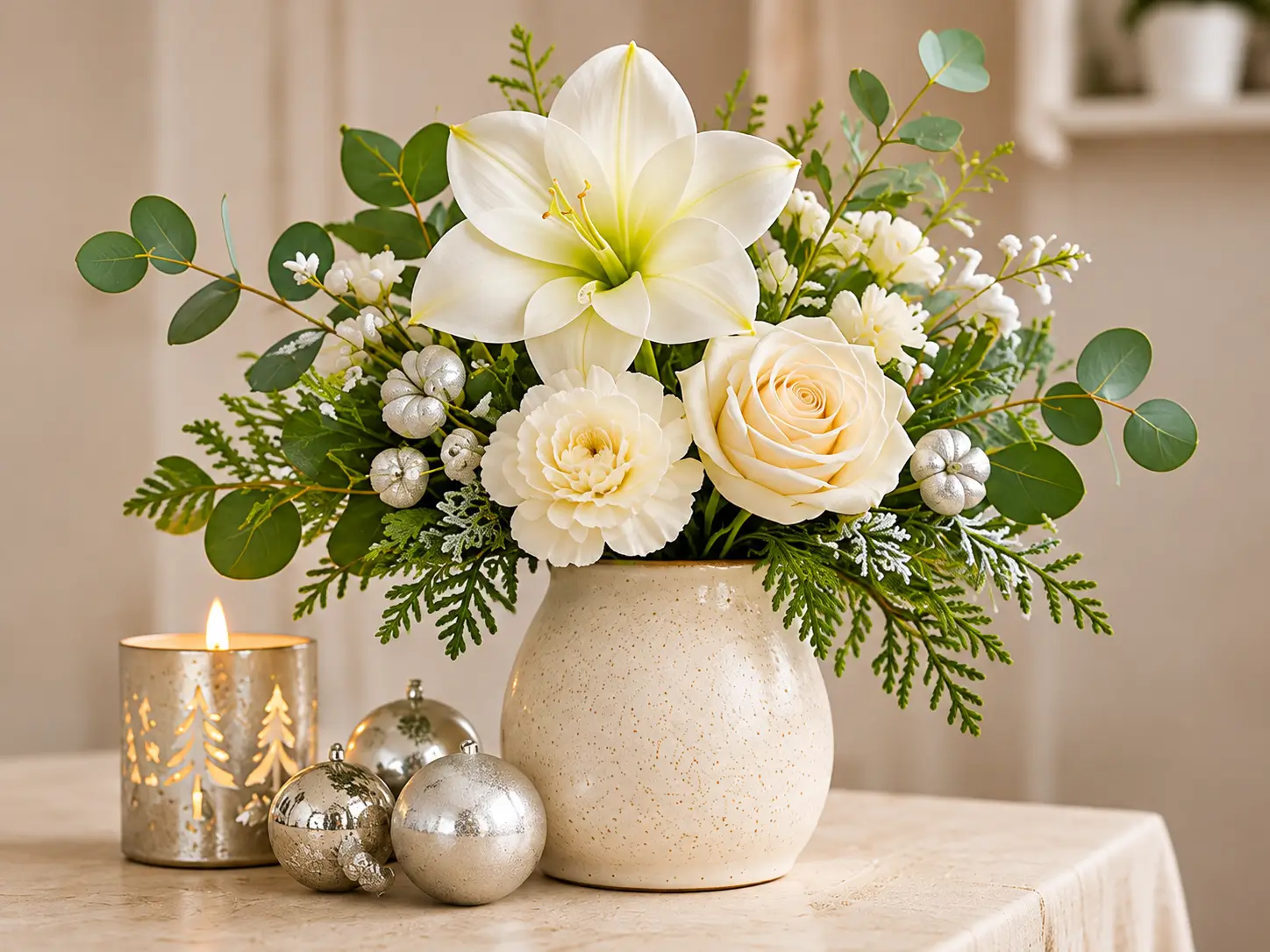
2. White Winter Wonderland Arrangement
Best for: Minimalist living rooms and elegant winter decorating.
What you need: Five white roses, four white carnations, four eucalyptus sprigs and a cream stoneware vase.
How to arrange: Begin with the eucalyptus, leaving a few branches taller than the others. Cluster white roses loosely and fill with carnations without covering their centers. Let the pale flowers contrast with the green foliage.
Styling tip: Place silver ornaments beside the vase rather than among the petals.
3. Rustic Pinecone Christmas Arrangement
Best for: Farmhouse tables and cabin-inspired interiors.
What you need: Cream carnations, red chrysanthemums, florist-supplied evergreen foliage, dry pinecones and a ceramic vase.
How to arrange: Build an irregular greenery outline, then nestle the flowers within it. Place clean dry pinecones around the outside or secure them to appropriate decorative picks instead of leaving them in the vase water.
Styling tip: Natural textures are the main feature; avoid heavy glitter.
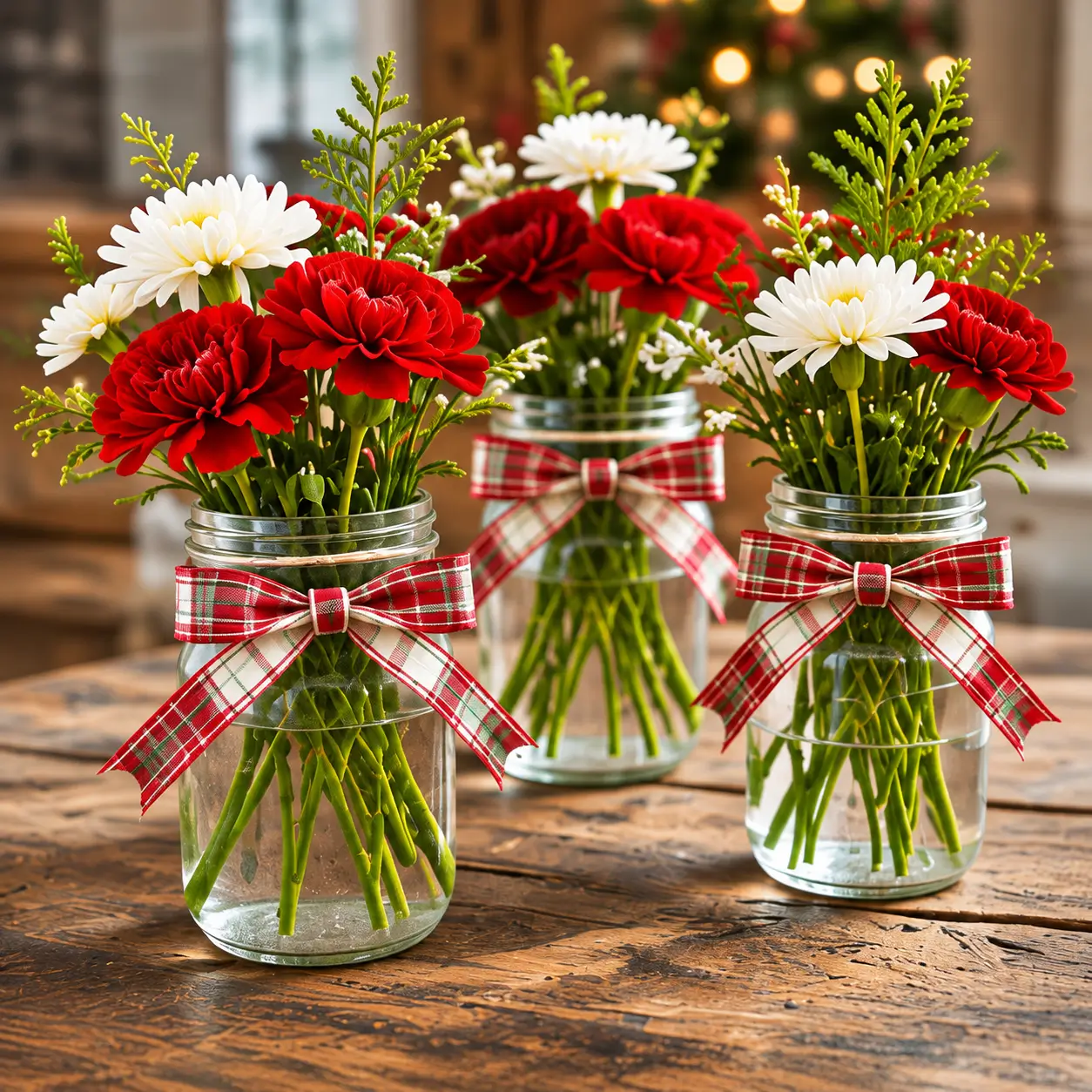
4. Christmas Flower Arrangements in Mason Jars
Best for: Kitchen windowsills, shelves and small dining tables.
What you need: Three red carnations, two white chrysanthemums, three short cedar stems, a clean Mason jar and plaid ribbon.
How to arrange: Fill the jar with fresh water and cut-flower food, trim the foliage to suit the jar, and arrange a relaxed rounded cluster of blooms. Tie the ribbon outside the glass so it stays dry.
Styling tip: Make three jars in coordinating colors for a long table. For year-round container ideas, explore our Mason jar arrangements guide.
5. Dramatic Christmas Amaryllis Display
Best for: Entryway consoles and bold winter statements.
What you need: One or two amaryllis stems, restrained greenery and a tall, heavy waterproof vase.
How to arrange: Give the large blooms space and follow your supplier’s guidance for supporting and conditioning their hollow stems. Position the vase where it cannot tip and keep decorations below the flowers.
Styling tip: Amaryllis is toxic to cats and dogs if ingested; do not use it where pets can reach it.
6. Red and Gold Christmas Centerpiece
Best for: Christmas Eve and formal meals.
What you need: Burgundy roses, red carnations, dark greenery, waterproof gold-tone container and a few decorative ornaments.
How to arrange: Place the largest blooms first and create a supportive foliage outline. Use one gold-tone accent and set ornaments around the vase base instead of overloading the flower arrangement.
Styling tip: Avoid relying on a decorative metal container to hold water unless it has a waterproof liner.
7. Mini Christmas Flower Arrangements
Best for: Desks, apartments and narrow shelves.
What you need: One red rose, one white carnation and one small greenery sprig per bud vase.
How to arrange: Prepare several little vases, trim each stem to complement the vessel, and vary the height of the flowers. Repeat the same colors across a shelf so the arrangements look intentional.
Styling tip: Group three mini arrangements when a larger centerpiece would crowd the room.
8. Woodland Evergreen and White Rose Vase
Best for: Natural and woodland-themed interiors.
What you need: White roses, pine and cedar stems, and a simple ceramic vase.
How to arrange: Set out the longest foliage first to establish the width, then add white roses in little clusters. Allow evergreen texture and negative space to remain visible.
Styling tip: Use identifiable, florist-supplied greenery appropriate for fresh floral work.
9. Burgundy and Blush Holiday Flowers
Best for: Romantic Christmas tables and modern homes.
What you need: Burgundy roses, blush carnations, a few eucalyptus stems and a neutral vase.
How to arrange: Group the dark roses slightly off-center and use light carnations to soften their edges. Finish with small green accents and avoid bright red ornaments that compete with the softer palette.
Styling tip: A dusty-rose ribbon can tie this arrangement into a pink-and-gold holiday theme.
10. Ornament-Accented Christmas Flowers
Best for: Playful sideboards and festive entryways.
What you need: Red carnations, white chrysanthemums, greenery and lightweight ornaments.
How to arrange: Create a balanced fresh arrangement first, then position ornaments beside the vase. If using decorative picks, keep them stable and avoid damaging flower stems.
Styling tip: Secure breakable ornaments away from table edges and children.
11. Scandinavian White and Green Centerpiece
Best for: Minimalist or Scandinavian interiors.
What you need: Three white roses, four white carnations, several light greenery stems and stoneware.
How to arrange: Keep the silhouette open and slightly asymmetrical. Use the plain vase as part of the design; avoid bows, glitter and too many ornaments.
Styling tip: Pair with a battery-operated candle for a clean winter display.
12. Rustic Christmas Flowers in a Wooden Box
Best for: Rectangular farmhouse dining tables.
What you need: Red carnations, white chrysanthemums, cedar, two or three small waterproof jars and a wooden box.
How to arrange: Place the water-filled jars securely inside the box. Arrange small groups of flowers in each vessel and conceal the jars with foliage. The wood should never hold standing water.
Styling tip: A narrow plaid ribbon around the outer box adds color without cluttering the flowers.
13. Soft Pink Christmas Flowers
Best for: Romantic contemporary rooms.
What you need: Blush roses, pale carnations, eucalyptus and a cream vase.
How to arrange: Build a soft oval shape with greenery and two shades of pink flowers. Put champagne-colored ornaments nearby rather than mixing decorations among petals.
Styling tip: Dusty pink and silver-green foliage make a gentle alternative to red-and-green decor.
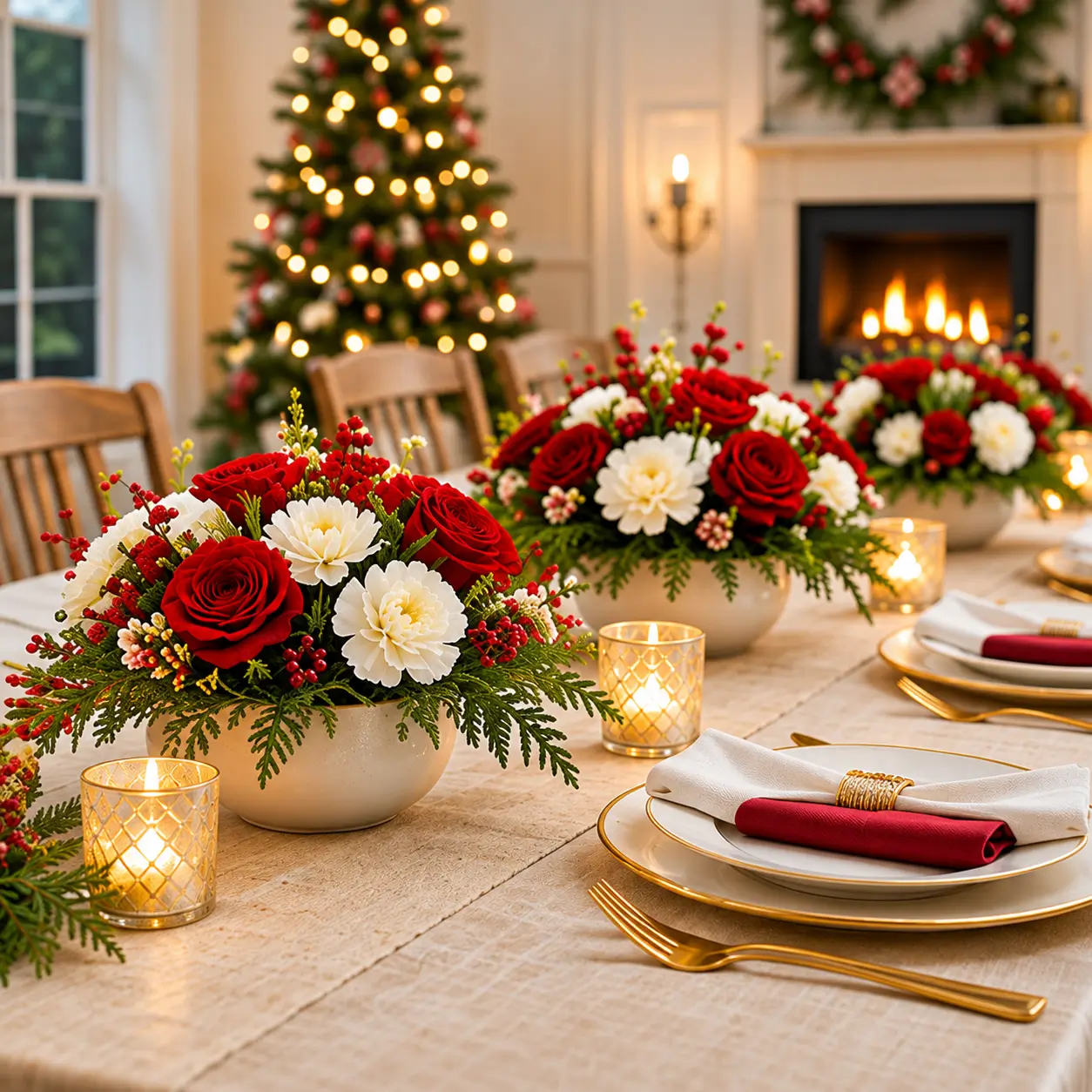
14. Long Christmas Table Floral Arrangement
Best for: Large family dinners.
What you need: Three low waterproof containers, roses, carnations and assorted seasonal greenery; allow approximately 24–36 fresh stems total including foliage.
How to arrange: Make one slightly larger central grouping and two smaller arrangements. Space them along the table while leaving serving room. Check from seated eye level and lower any blooms that obstruct conversation.
Styling tip: Use our bouquet stem-count guide to adjust quantities.
15. Luxury White and Gold Christmas Flowers
Best for: Formal dining rooms and sophisticated seasonal displays.
What you need: Ivory roses, cream carnations, white chrysanthemums, restrained dark greenery and a sturdy gold-tone waterproof vase.
How to arrange: Place a broad greenery base, add premium roses as focal flowers and fill with carnations and chrysanthemums. Leave subtle spaces around the larger blooms.
Styling tip: Using a few premium roses with affordable supporting flowers creates an elegant look without a huge budget.
Beginner Tutorial: Make a Red-and-White Christmas Centerpiece
For one beginner-friendly project among these DIY Christmas flower arrangements, use five red roses, five white carnations and four cedar stems (14 total fresh stems including greenery), one low waterproof vase, velvet ribbon, clean water and cut-flower food. Adjust to your container size; this is a design plan, not a physically tested arrangement.
- Prepare the vase: Wash and rinse it, add fresh water and mix flower food exactly as directed.
- Condition stems: Trim with clean tools and remove leaves that would sit below water.
- Build a foliage framework: Arrange four cedar stems in a broad, low outline, with cut ends submerged.
- Add the roses: Place one near the center and four around it at slightly varied heights.
- Fill with carnations: Add the white flowers between roses without hiding the focal blooms.
- Finish and check: Tie ribbon around the outside, rotate the vase and check the view from seated eye level.
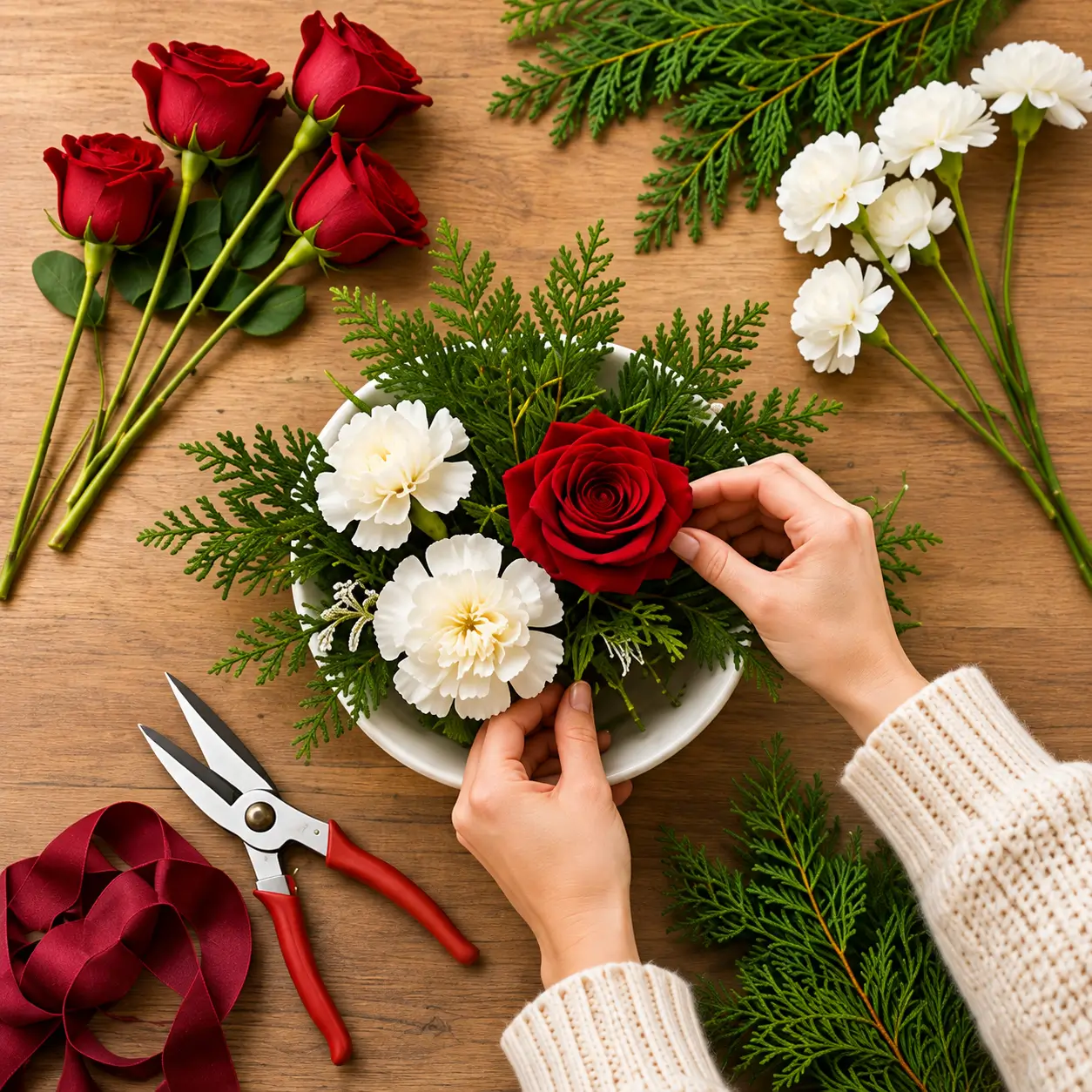
Allow approximately 20–30 minutes if you are comfortable trimming stems, or longer for a first attempt. For general bouquet-building principles, see our step-by-step beginner bouquet guide.
Budget and Shopping Tips
The cost of DIY Christmas flower arrangements varies widely by city, florist, time of year and flower freshness. The following US-dollar ranges are illustrative budgeting scenarios, not verified retail quotes. Under $20: choose a small reused jar with carnations and a few greenery sprigs. At $20–$40: try a medium centerpiece with chrysanthemums and a small number of roses. At $40–$75: plan a larger arrangement with premium focal blooms and more foliage.
Prioritize flower freshness and a stable container rather than purchasing many ornamental picks. Check your local store or florist for real prices before committing to a design.
Christmas Flower Preparation Timeline
Three to five days before: Select which DIY Christmas flower arrangements suit your event, confirm flower availability, clean the containers and prepare ribbons or trays.
One to two days before: Buy or collect fresh flowers at a suitable opening stage. Condition them according to your florist’s instructions and keep them hydrated in a cool suitable location.
The day before or Christmas Day: Complete the arrangement, check water levels, avoid heating vents and confirm that flowers are low enough for conversation if the display is on a dining table.
Troubleshooting Common Problems
| Problem | Try this |
|---|---|
| Drooping flowers | Check water access, stem ends and florist-specific conditioning instructions. |
| Leaning arrangement | Choose a heavier vase and rebalance the tall or heavy stems. |
| Flowers hidden by greenery | Remove or shorten the foliage that blocks focal blooms. |
| Cloudy vase water | Clean the container and replace the water. |
| Overcrowded display | Remove a few supporting stems or use a wider vase. |
| Table conversation blocked | Lower the tallest flowers or divide the centerpiece into smaller vessels. |
How to Keep Christmas Flowers Fresh
To keep DIY Christmas flower arrangements fresh, begin with a clean vase, remove submerged leaves, and follow the instructions on commercial cut-flower food. Check the water every day, replace cloudy water and remove deteriorating blooms. Keep flowers away from radiators, fireplaces, heating vents and strong direct sunlight.
For further care guidance, read Iowa State University Extension’s cut-flower guide and the Royal Horticultural Society’s cut-flower conditioning advice.
Christmas Floral Safety: Pets, Heat and Decorations
Some festive plants can be hazardous to pets. For example, the ASPCA lists amaryllis and holly as toxic to cats and dogs. Check the botanical identity of every flower, berry and greenery species and keep questionable plant materials out of reach.
Avoid open flames close to dried evergreen foliage, paper, ribbon or floral decorations. Battery-operated candles are generally a practical choice around holiday centerpieces. Secure glass ornaments so children and pets cannot easily knock them over.
Frequently Asked Questions
What are the easiest DIY Christmas flower arrangements?
Mason jars, small bud vases and a simple red-and-white low centerpiece are beginner-friendly because they use few materials and straightforward shapes.
How many flowers do I need for a Christmas centerpiece?
For a small-to-medium centerpiece, approximately 10–18 fresh stems including greenery can be a planning starting point. Adjust for the size of your blooms and container.
Can I make Christmas floral arrangements without foam?
Yes. A clean water-filled vase, stable jar, flower frog or suitable reusable grid can support fresh stems.
Which flowers work best for Christmas centerpieces?
Roses, carnations, chrysanthemums, alstroemeria and amaryllis can work well depending on availability, design and pet-safety considerations.
Can I make Christmas arrangements two days early?
Often yes, if flowers are fresh, conditioned correctly and kept cool with adequate water. Delicate varieties may look best when arranged closer to the event.
How can I make Christmas flowers look expensive on a budget?
Choose a few focal flowers, support them with affordable carnations and foliage, keep a cohesive color palette and reuse a tasteful container.
Final Thoughts
The most attractive DIY Christmas flower arrangements combine a clear color palette, fresh stems, appropriate greenery and a container suited to the finished shape. Start with one small red-and-white design, then try different arrangements as your confidence grows. Save this guide for Christmas decorating inspiration.
Editorial note: Images in this article are AI-generated concept illustrations of floral styling, not documentation of handmade projects tested by our team.