
Lily flower bouquet designs can feel classic, romantic, modern, or dramatic depending on the variety, color, greenery, and wrapping you choose. From clean white lilies in a glass vase to pink lilies paired with roses, these 12 ideas help you choose a bouquet for a gift, wedding, celebration, or home display—and offer simple styling and care tips for enjoying cut lilies longer.
Quick answer: For an elegant, versatile bouquet, combine three to five large lily stems with a little complementary greenery and keep the color palette simple. Choose white for a timeless look, pink for romance, orange for a lively accent, or calla lilies for a sculptural modern design. Always check the exact lily species before bringing one into a home with cats.
12 Elegant Lily Flower Bouquet Ideas
1. Classic White Lily Flower Bouquet
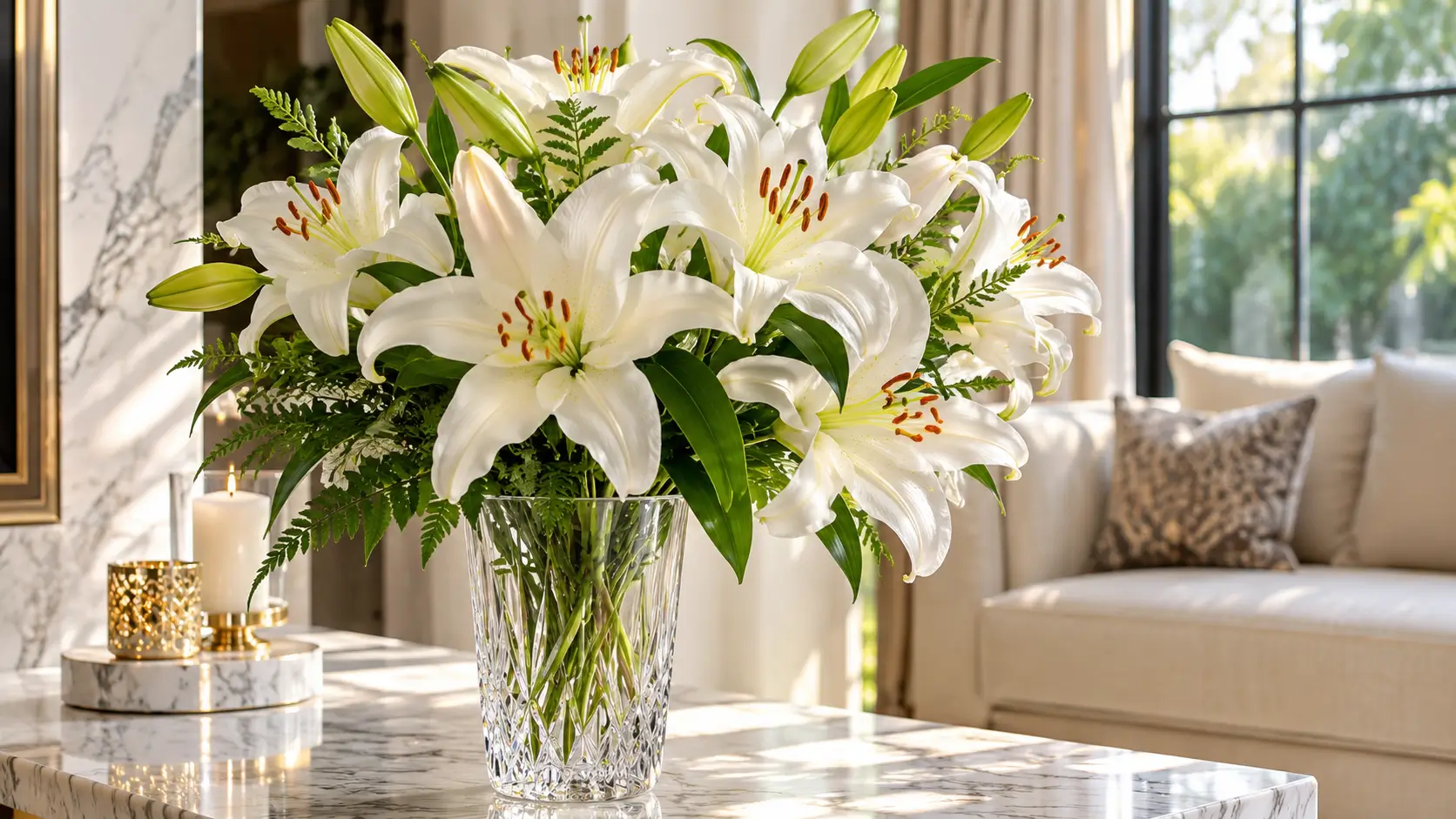
White lilies create a graceful arrangement that works for birthdays, sympathy flowers, anniversaries, formal events, and everyday décor. Their large blooms make a few stems look substantial, so a simple bouquet can feel luxurious without being crowded. Use a clear glass vase, a restrained amount of greenery, and a clean silhouette to let the flowers take center stage.
2. Romantic Pink Lily Bouquet
Soft pink lilies bring a gentle, romantic mood to a bouquet. Pair pale pink blooms with ivory accents or a few darker pink flowers for depth. A loose, rounded shape looks especially beautiful for anniversaries, thoughtful gifts, and spring celebrations. Keep the wrapping neutral so the petals remain the focal point.
3. Lily and White Rose Bouquet
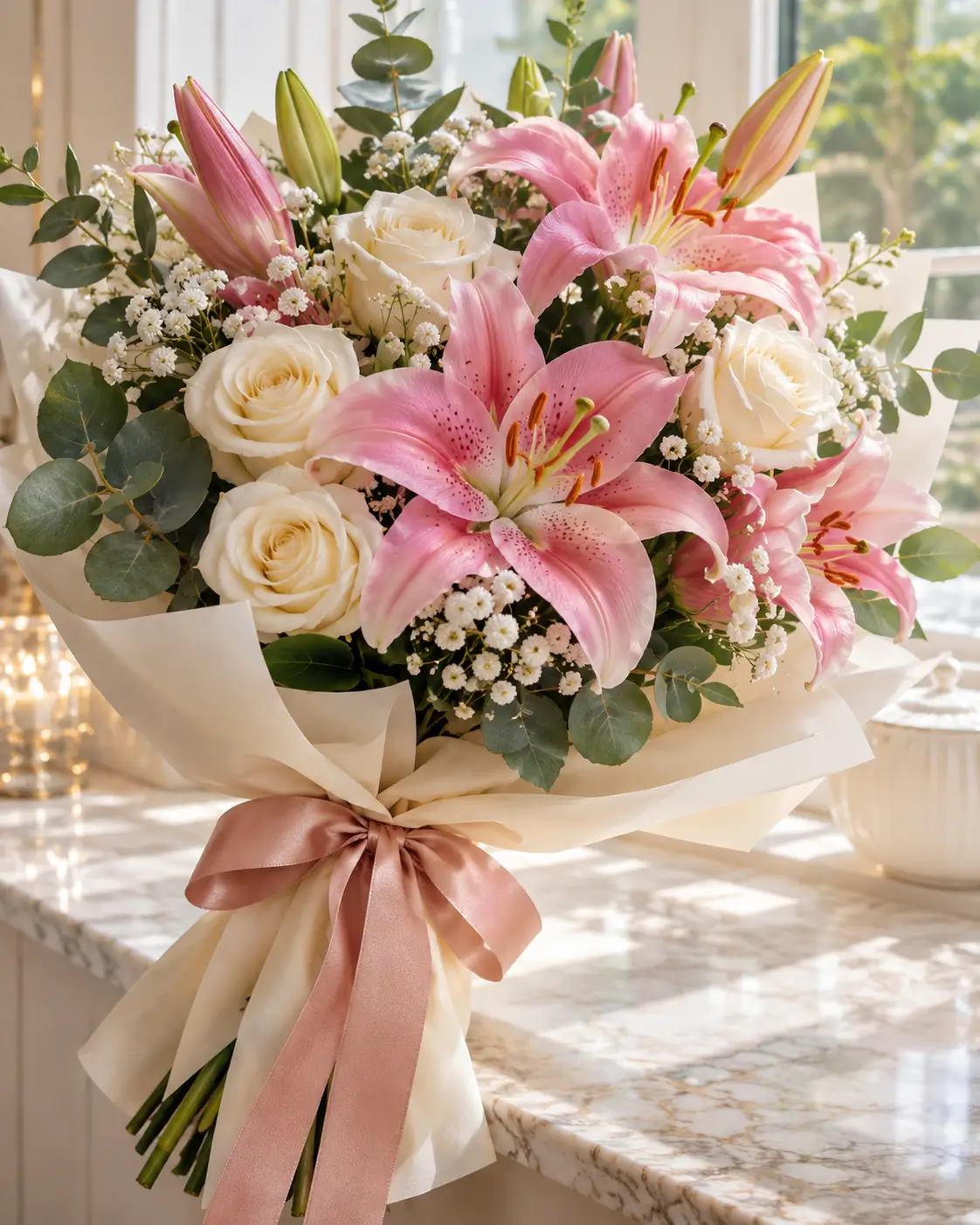
Pink lilies and creamy white roses create a rich mix of flower shapes: lilies provide open, expressive petals while roses add layered texture. Add a small amount of eucalyptus or delicate filler flowers, then wrap the stems in ivory paper with a blush ribbon. This combination suits romantic gifts, engagement celebrations, and elegant table displays.
4. Bright Orange Lily Bouquet
Orange lilies add warmth and energy. Their color looks striking with deep green foliage, cream flowers, or natural kraft wrapping. For a balanced arrangement, let the orange blooms be the main focal point and avoid mixing too many competing shades. This design is a cheerful choice for summer birthdays, congratulations, and bold home décor.
5. Sculptural Calla Lily Bouquet
Calla lilies have a sleek, curved shape that makes them ideal for minimalist bouquets. Arrange several stems at different heights, with little or no filler, and use a simple ribbon around the stems. White callas feel formal and timeless; colored varieties can make a modern statement. Calla lilies are not true lilies, but they can still irritate pets if chewed.
6. Pink and White Lily Bouquet
Mixing pink and white lilies creates a fresh, layered color palette without making the bouquet busy. Choose blooms at slightly different opening stages so the arrangement has movement and will continue to develop. A transparent vase or soft neutral wrapping keeps this two-color design light and elegant.
7. Stargazer Lily Bouquet
Stargazer lilies are known for their dramatic pink petals, speckled centers, and strong visual presence. Use a small number of open blooms with a few buds, and keep other flowers understated. They are naturally attention-grabbing, so a simple vase and limited greenery are often enough. Stargazer lilies are true lilies and are extremely dangerous to cats.
8. Lily and Eucalyptus Bouquet
Eucalyptus adds a muted green color and a soft, airy outline around large lily blooms. Begin with the lilies as focal flowers, then place eucalyptus around the outer edge and between stems to create space. Avoid packing the bouquet too tightly; a little negative space makes each lily easier to see and gives the arrangement a relaxed florist-style finish.
9. Luxury Lily Wedding Bouquet
For a wedding bouquet, use lilies in a consistent color with a carefully controlled amount of greenery. A hand-tied bouquet can be rounded, elongated, or slightly cascading depending on the dress and setting. Wrap the stems with satin, silk, or a narrow fabric ribbon. Before choosing lilies for a wedding, consider fragrance, pollen, the venue, and whether the flowers will be present around pets.
10. Rustic Lily and Wildflower Bouquet
Combine lilies with seasonal, smaller flowers and natural foliage for a garden-inspired look. Keep the lily stems tall and use the smaller flowers to soften the outline. Brown kraft paper, linen ribbon, or a simple twine wrap can reinforce the rustic style without hiding the blooms.
11. Minimalist Lily Bouquet in a Glass Vase
For a quick arrangement at home, place three to five lily stems in a clean glass vase. Trim the stems so the blooms sit above the rim with room to open. Remove foliage that would be submerged, and use enough water to support the stems. The simple design is especially useful when you want a focal point for a bedside table, entryway, or dining room.
12. Colorful Mixed Lily Bouquet
Combine two or three lily colors for a cheerful bouquet, but repeat each color rather than adding one of every shade. Repetition creates a more cohesive arrangement. Use a vase that supports the stems and keep the foliage lighter than the flowers so the color combination remains clear.
How to Arrange a Lily Flower Bouquet at Home
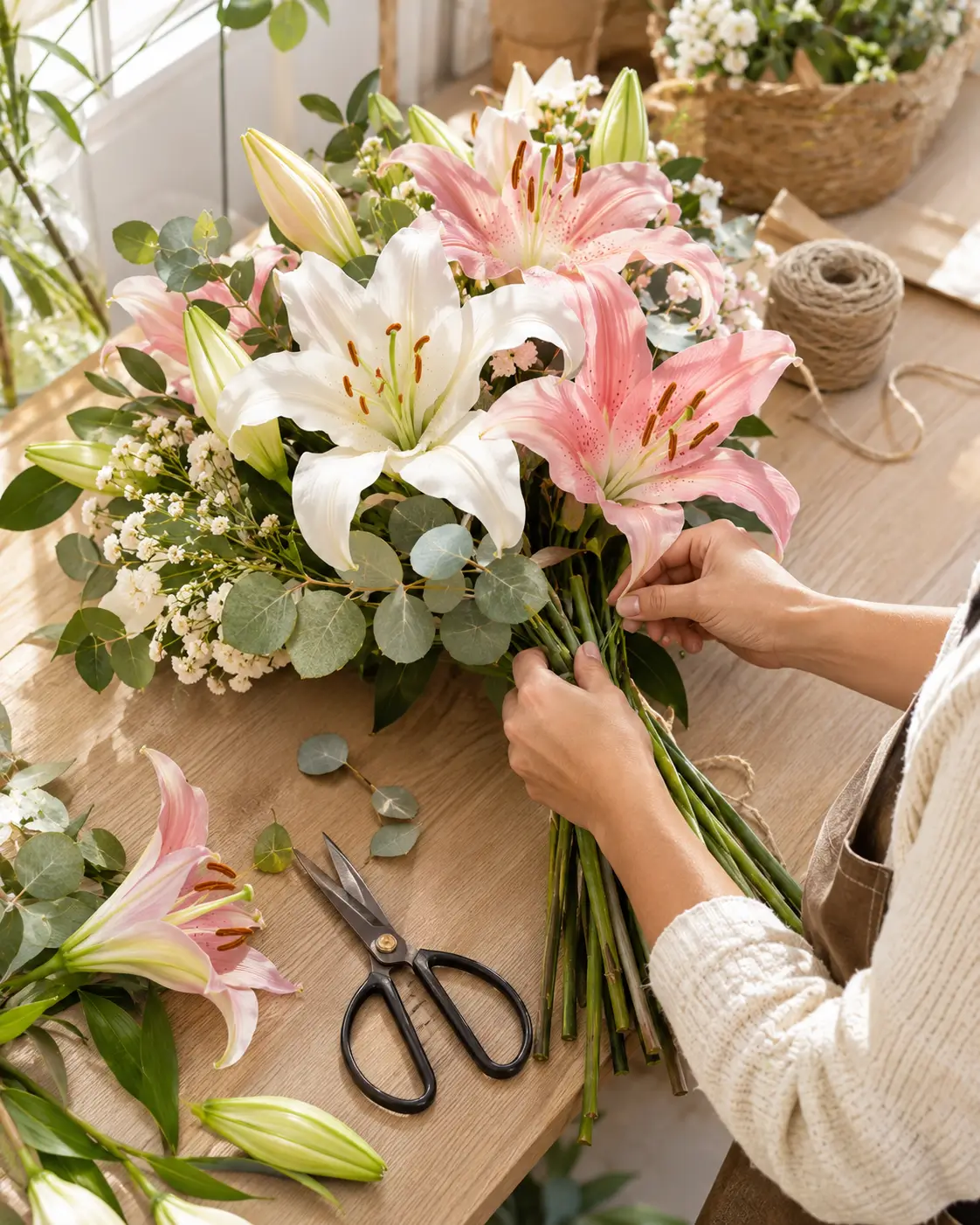
You can make a beautiful lily bouquet with a few stems, a clean vase, and basic tools. Work gently: lily petals can bruise, and their stems may be heavier than they appear.
- Choose a vase: Select a clean container with a stable base and an opening that supports the number of stems.
- Prepare the water: Fill the vase with fresh water and add flower food according to its packet directions.
- Trim the stems: Use clean, sharp shears to recut the stems at an angle. Place them in water promptly.
- Remove submerged foliage: Strip leaves that would sit below the waterline to keep the water cleaner.
- Build the shape: Start with the largest lilies, turning the vase as you work. Add greenery sparingly to create balance and breathing room.
- Check the height: Adjust the stems so the bouquet looks balanced from the front and sides. Keep heavy blooms supported.
If you are making a bouquet for a gift, you can finish the stems with simple wrapping. Our guide to wrapping a flower bouquet offers ideas for paper and ribbon that can complement the flowers.
How to Keep a Lily Bouquet Fresh Longer
- Wash the vase thoroughly before use.
- Follow the flower-food packet directions rather than adding random household ingredients.
- Remove leaves below the waterline and recut stems when you refresh the water.
- Check water daily and change it when it becomes cloudy, or every few days as needed.
- Keep lilies away from direct sun, heaters, and hot drafts.
- Remove fading blooms or fallen petals, and keep the vase clean.
For more detail, see Penn State Extension’s fresh flower care guide, which explains vase hygiene, flower food, trimming, and water maintenance.
Are Lilies Safe for Cats?
No—true lilies and daylilies are highly toxic to cats. Plants in the Lilium and Hemerocallis groups can cause acute kidney injury. Exposure to petals, leaves, stems, pollen, or water from a lily vase can be dangerous. If a cat may have been exposed, seek veterinary help immediately; do not wait for symptoms.
Calla lilies and peace lilies are not true lilies and do not cause the same kidney failure, but they contain irritating crystals that can cause oral pain, drooling, and vomiting if chewed. Because common names can be confusing and bouquets may contain mixed plants, the safest option for a home with cats is to avoid lilies and confirm plant identities.
For additional information, consult the ASPCA guide to lily toxicity and contact a veterinarian or animal poison-control service after any suspected exposure.
Frequently Asked Questions
How many lilies should I use in a bouquet?
Three to five large lily stems can make a simple, balanced bouquet. Larger designs may use more flowers, greenery, or filler depending on vase size and the arrangement’s intended shape.
Which colors are best for a lily bouquet?
White is versatile and classic, pink is romantic, orange is bright and expressive, and mixed pink-and-white lilies offer a soft contrast. Choose a palette that suits the occasion and setting.
Can I mix lilies with roses?
Yes. Lilies and roses combine well because their shapes contrast. Keep the color palette limited, use a little greenery, and give the large lily blooms room to open.
How do I make lilies open faster?
Place the bouquet in a comfortable room away from heat and direct sun, and keep the water fresh. Flowers open at their own pace, so avoid forcing petals or placing the bouquet near a heater.
Are calla lilies the same as true lilies?
No. Calla lilies belong to a different plant group. They do not cause the kidney failure associated with true lilies and daylilies, but their sap and plant tissues can still irritate the mouth and digestive tract if chewed.
Final Thoughts
A lily flower bouquet can be tailored to almost any style—from a minimalist vase of white blooms to a romantic mix of pink lilies and roses. Choose a color palette, let the lilies remain the focal point, and use fresh water and careful conditioning to enjoy the arrangement. If cats live in your home, avoid true lilies and verify every plant in a mixed bouquet before bringing it indoors.