
Pipe cleaner flower bouquet designs use colorful fuzzy chenille stems to create handmade blooms that never need watering. To make a simple bouquet, bend pipe cleaners into petals, attach a flower center and sturdy stems, add leaves, then wrap the arrangement in paper and ribbon.
Explore 15 distinctive bouquet styles and learn how to make pipe cleaner flowers with an approachable seven-step tutorial, supply estimates, wrapping ideas and craft safety tips. The flowers pictured are original AI-generated design illustrations rather than photographs of a project personally completed by our editorial team.
What Is a Pipe Cleaner Flower Bouquet?
A pipe cleaner flower bouquet is an arrangement of handmade blooms shaped from soft, fuzzy craft wires, also called chenille stems or fuzzy wires. The wire core bends into petals, while the fuzzy coating gives each flower a textured, playful finish.
See Pinterest’s 2026 Wedding Trends Report for context on the growing popularity of alternative bouquet materials. Unlike fresh flowers, these craft flowers do not need watering, although they should be kept dry and away from strong heat.
For readers who want to learn the basics of arranging stems and balancing shapes, our guide to making a flower bouquet offers useful composition principles that also apply to chenille crafts.
You can personalize colors, wrapping and flower shapes for a birthday, graduation, anniversary or wedding-inspired keepsake. Begin with simple loop-petal daisies before trying elaborate rose and tulip shapes.
Supplies for a Pipe Cleaner Flower Bouquet
For an introductory five-flower arrangement, gather about 15 colored chenille stems for petals, five contrasting stems for flower centers and five or more green stems for leaves. You will also need five sturdy floral stems or craft-wire supports, floral tape, wire cutters, wrapping paper and a ribbon.
This is an illustrative supply estimate for simple flowers, not a tested universal recipe; larger or layered flowers use more materials. Choose chenille stems with even fuzzy coverage and flexible wire cores. Keep cut wire ends folded inward or fully covered to prevent scratches.
15 Pipe Cleaner Flower Bouquet Ideas
Before choosing a pipe cleaner flower bouquet style, decide on the color palette and occasion. These designs are creative concepts: the more complex shapes may need additional chenille stems and practice.
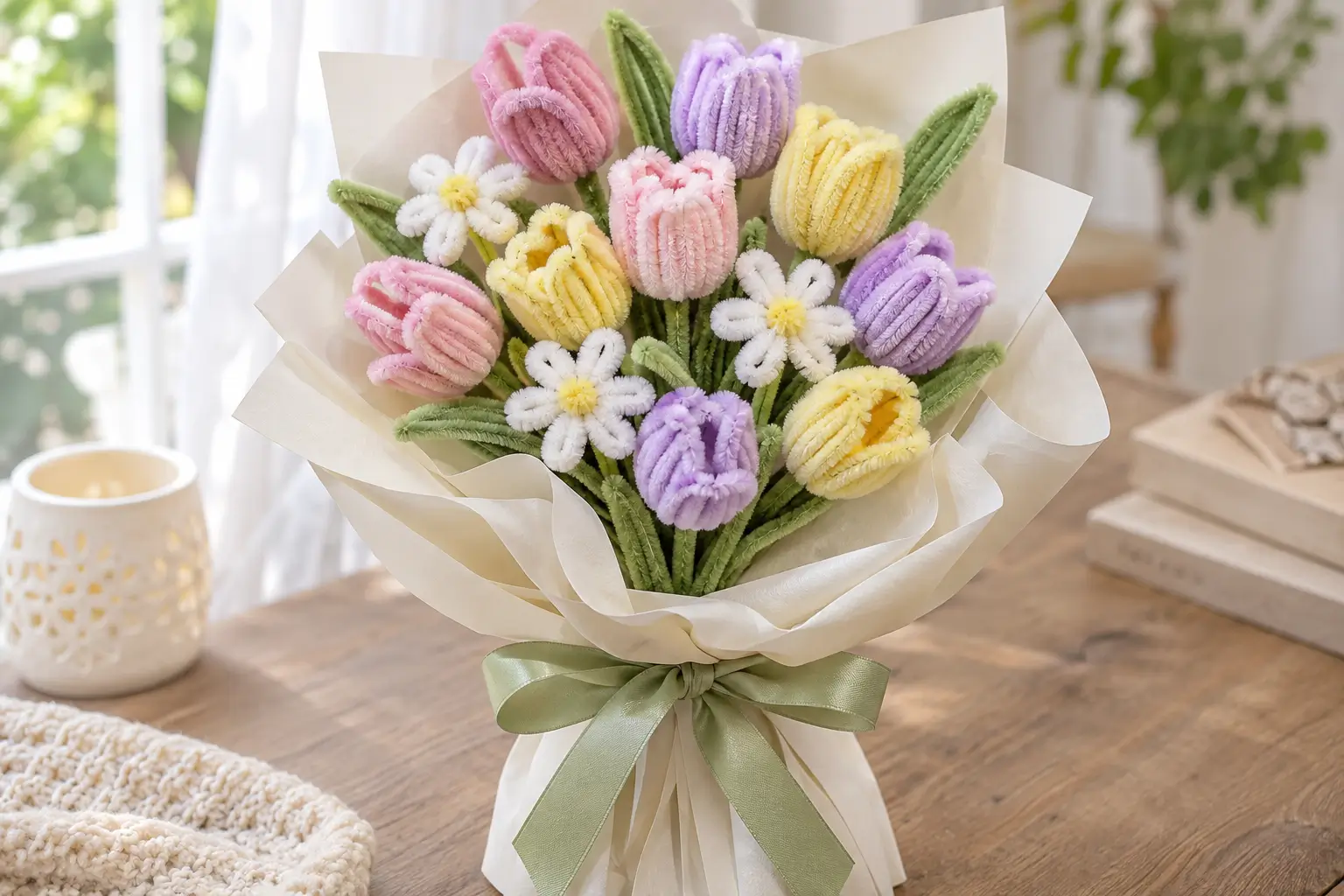
1. Pastel Tulip Pipe Cleaner Bouquet
Combine pale pink, lavender, butter yellow and cream tulip-inspired flowers. Bend fuzzy chenille stems into tall, cupped petals, leaving green leaves visible between blossoms. Arrange flowers at staggered heights and wrap the finished bouquet in matte ivory paper with a sage ribbon. This is a charming spring gift with a soft, modern palette.
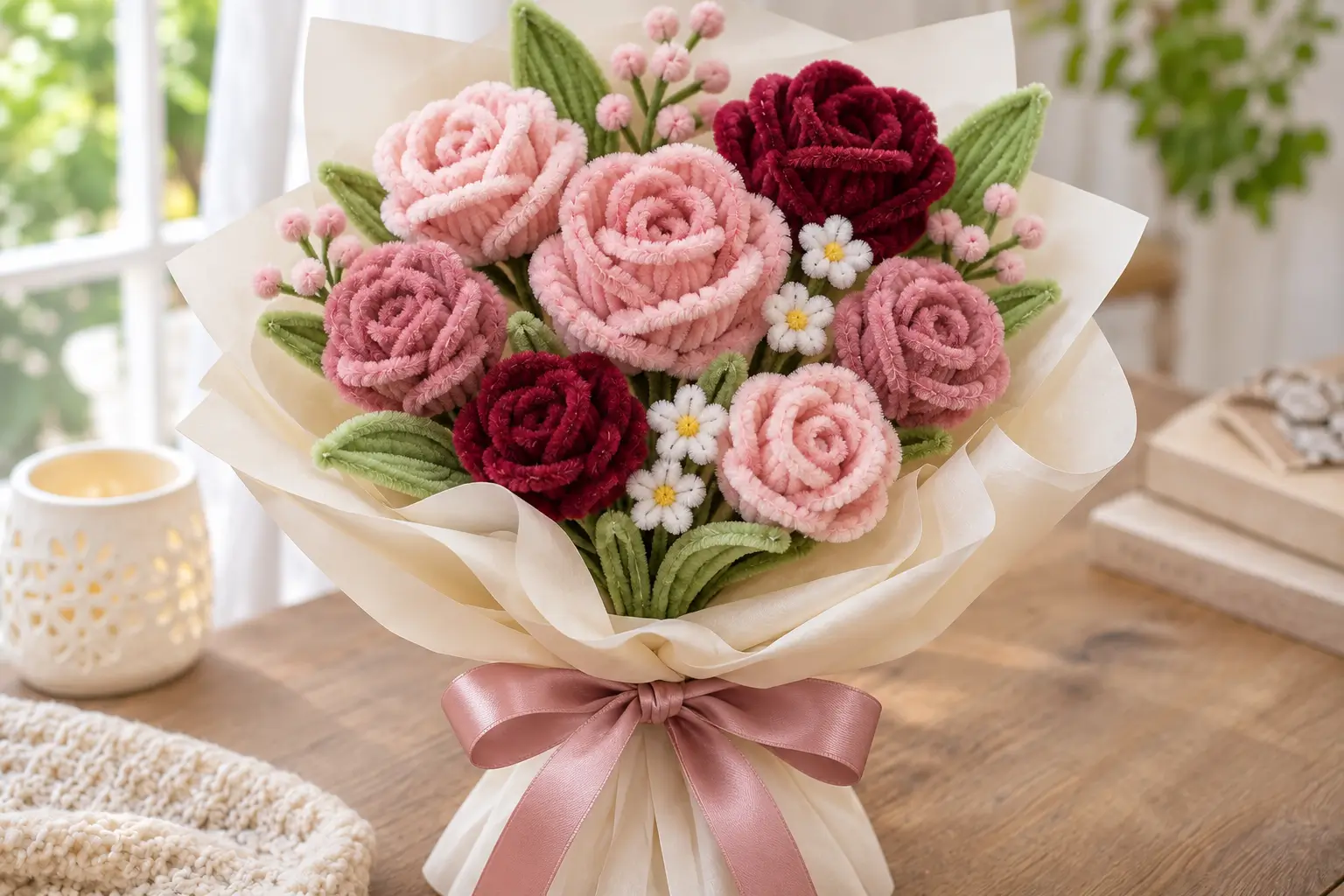
2. Romantic Pink and Burgundy Rose Bouquet
A romantic pipe cleaner flower bouquet uses layered rose-like spirals in blush, dusty pink and burgundy. Position deeper red blooms near the center and use soft green leaves and small white filler flowers around them. Rose shapes take more patience than simple daisies; secure each layer before building the next. A muted pink satin bow complements romantic birthday, anniversary and Valentine’s Day gifts.
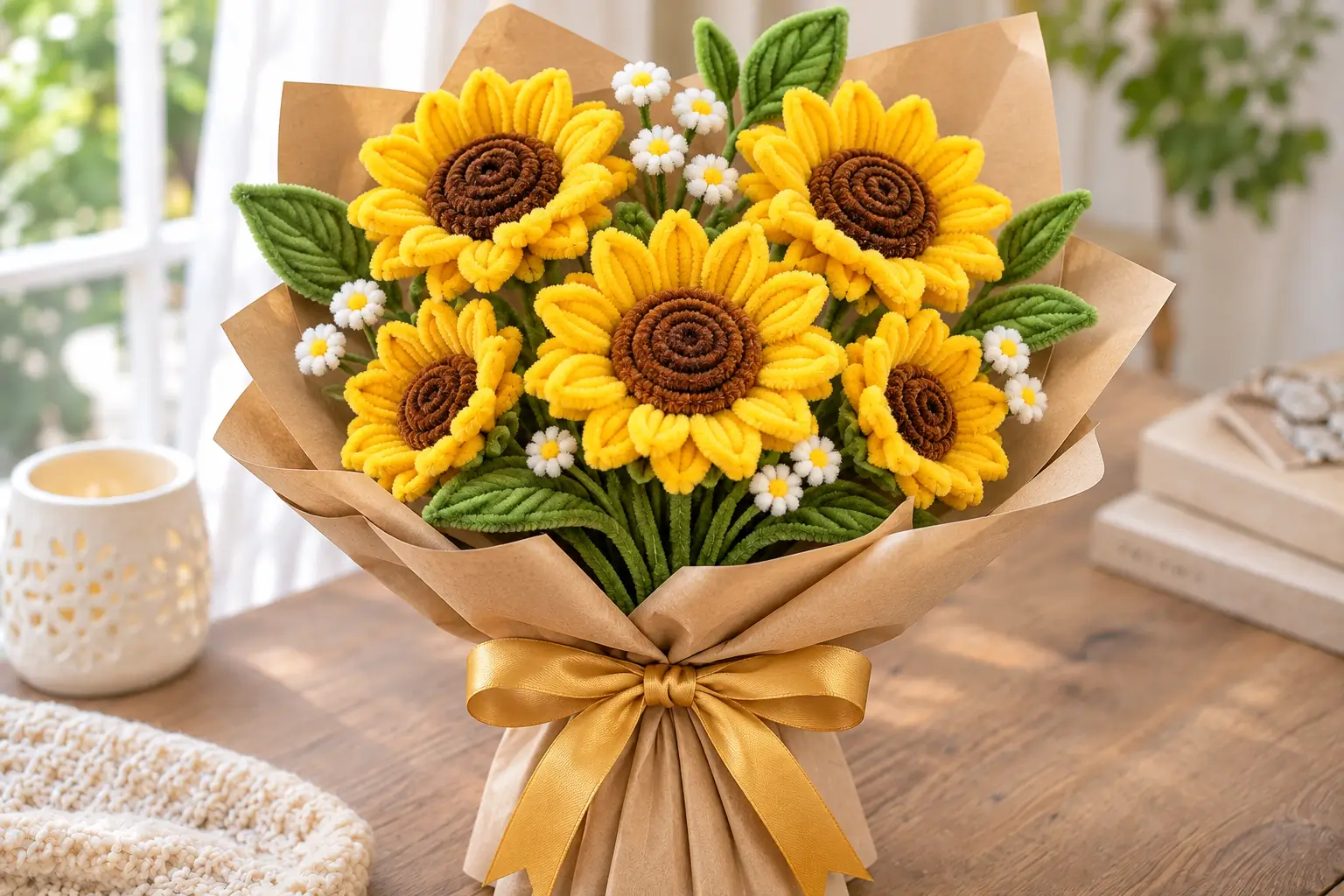
3. Sunflower Pipe Cleaner Flower Bouquet
Bright yellow chenille petals surrounding broad brown spiral centers make a cheerful statement bouquet. Use sturdy stems because larger sunflower heads can be heavier and less stable. Add a few small white daisies for contrast, then finish with natural kraft paper and a golden ribbon. This combination works for summer gifting and cheerful home decor.
4. Colorful Daisy Bouquet for Beginners
Daisies are one of the easiest flower shapes to practice. Form evenly spaced loops using white, yellow or pink chenille stems, then secure a contrasting circular center. Gather five to seven daisies with green leaves and keep the wrapping simple. A small bouquet of daisies makes an approachable first craft project.
5. Lavender-Inspired Fuzzy Flower Stems
Create narrow clusters of tiny purple chenille loops along green stems. Choose several shades of violet and lavender rather than making every stem identical. These slender flowers look attractive in a tall, simple vase or as a textural accent beside larger handmade blooms. They are inspired by lavender rather than botanical replicas.
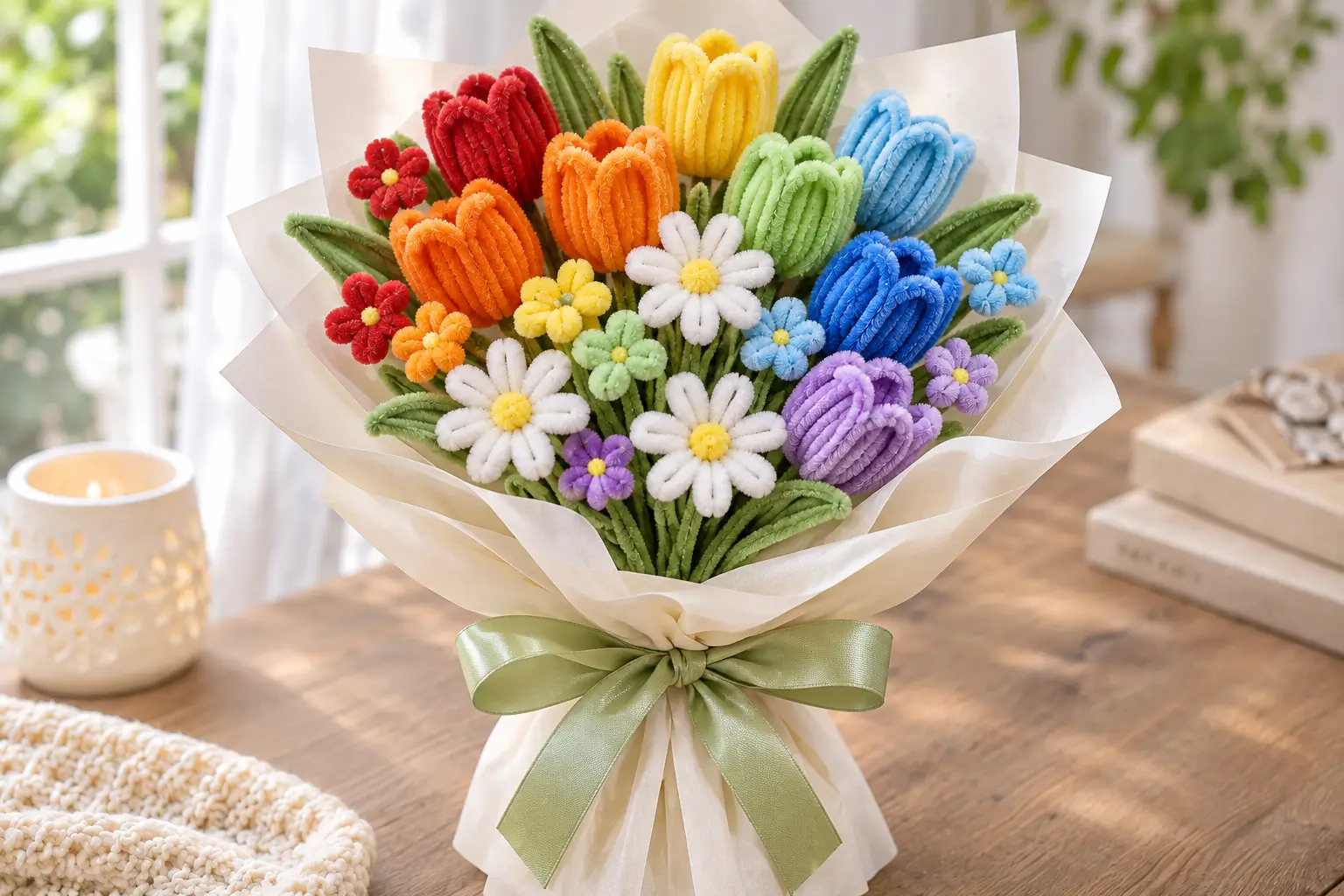
6. Rainbow Pipe Cleaner Flower Bouquet
Use a different vivid color for each tulip or daisy—red, orange, yellow, green, blue and purple. Repeat one or two flower shapes so the bold palette still feels cohesive. White wrapping paper gives the colors room to shine. This cheerful arrangement suits birthdays, classroom displays and playful gifts.
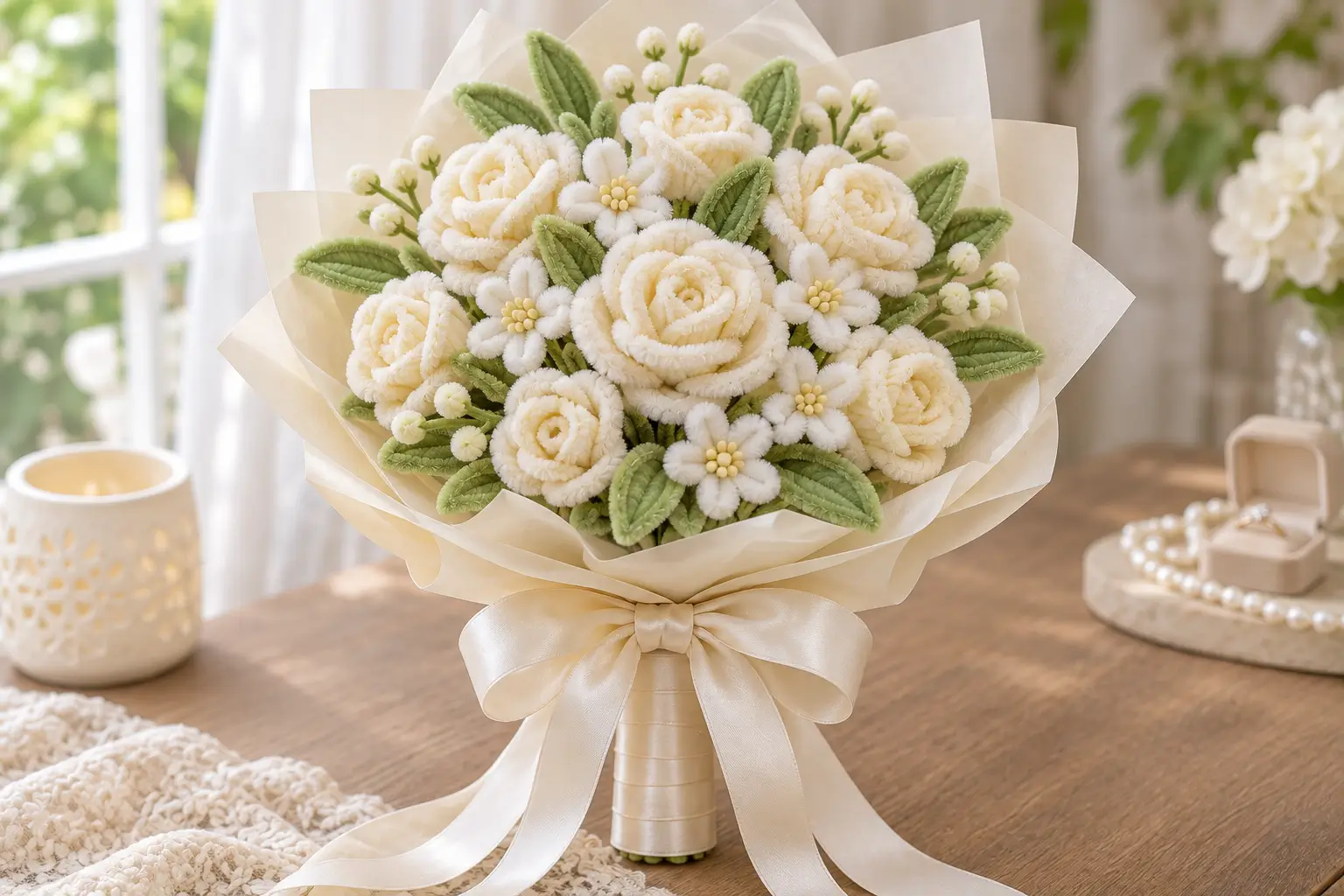
7. Ivory Wedding-Inspired Chenille Bouquet
A bridal-inspired pipe cleaner flower bouquet with ivory roses, white daisies and sage-green leaves creates a soft, romantic look. Use a rounded silhouette and secure the supportive stems firmly before tying a long satin ribbon. It may work as a keepsake or wedding-photo prop, but check weight, balance and sharp wire ends before anyone carries it. See our bouquet purse ideas for weddings for another creative floral accessory.
8. Burgundy and Blush Keepsake Flowers
Pair wine-colored roses with soft pink blossoms and pale green leaves. Place three focal flowers at different heights and fill gaps with smaller daisy shapes. Cream paper with a burgundy ribbon ties the colors together. This palette looks sophisticated without requiring perfect botanical realism.
9. Mini Pipe Cleaner Bouquet Gift Topper
A mini arrangement of three small blooms can decorate a wrapped gift or handwritten card. Make short stems, bind them securely and use a narrow paper sleeve. Keep any exposed wires away from skin and fragile wrapping. Mini bouquets are also a useful way to practice before assembling larger compositions.
10. Blue and White Modern Bouquet
Pale blue, deep blue and white chenille flowers make a striking contemporary palette. Use simple daisies and tulips with a few muted green leaves. Wrap in light gray or ivory paper. Blue flowers can be styled for graduation gifts or bedroom decor without imitating real floral varieties exactly.
11. Cottagecore Wildflower Mix
Mix little daisies, loose pastel blooms and tiny fuzzy clusters in dusty rose, butter yellow and lavender. Vary the height and direction of the flower heads to achieve an informal, meadow-inspired appearance. Kraft paper, twine and soft green leaves reinforce the rustic, handmade feeling.
12. Purple Tulip and Daisy Combination
Combine lilac tulips, pale purple daisies and deeper violet accents. Keep greenery abundant enough to visually separate neighboring purple blooms. Use cream wrapping to soften the palette. The result is a coordinated gift suitable for spring celebrations and purple-themed rooms.
13. Christmas Chenille Flower Bouquet
Create red rose-inspired flowers, small white daisies and evergreen-colored fuzzy leaves. Burgundy and cream wrapping or a restrained gold bow creates a festive presentation. Avoid open flames near these craft materials, and remember that artificial chenille foliage is decorative rather than heat-resistant.
14. Graduation Pipe Cleaner Flowers
Choose two school colors and create a compact bouquet of roses and daisies. Tie the flowers with a ribbon that matches a graduation outfit and attach a separate congratulatory card. Since chenille flowers stay intact, they can serve as a keepsake after the ceremony. For fresh-flower alternatives, explore our simple graduation bouquet guide.
15. Elegant Monochrome Flower Bouquet
Choose one color family such as ivory, sage, blush or lavender and combine different flower shapes in slightly different shades. Position larger blooms in the center, smaller daisies around the edges and textured green leaves behind. Minimal wrapping and a single satin bow keep the design refined.
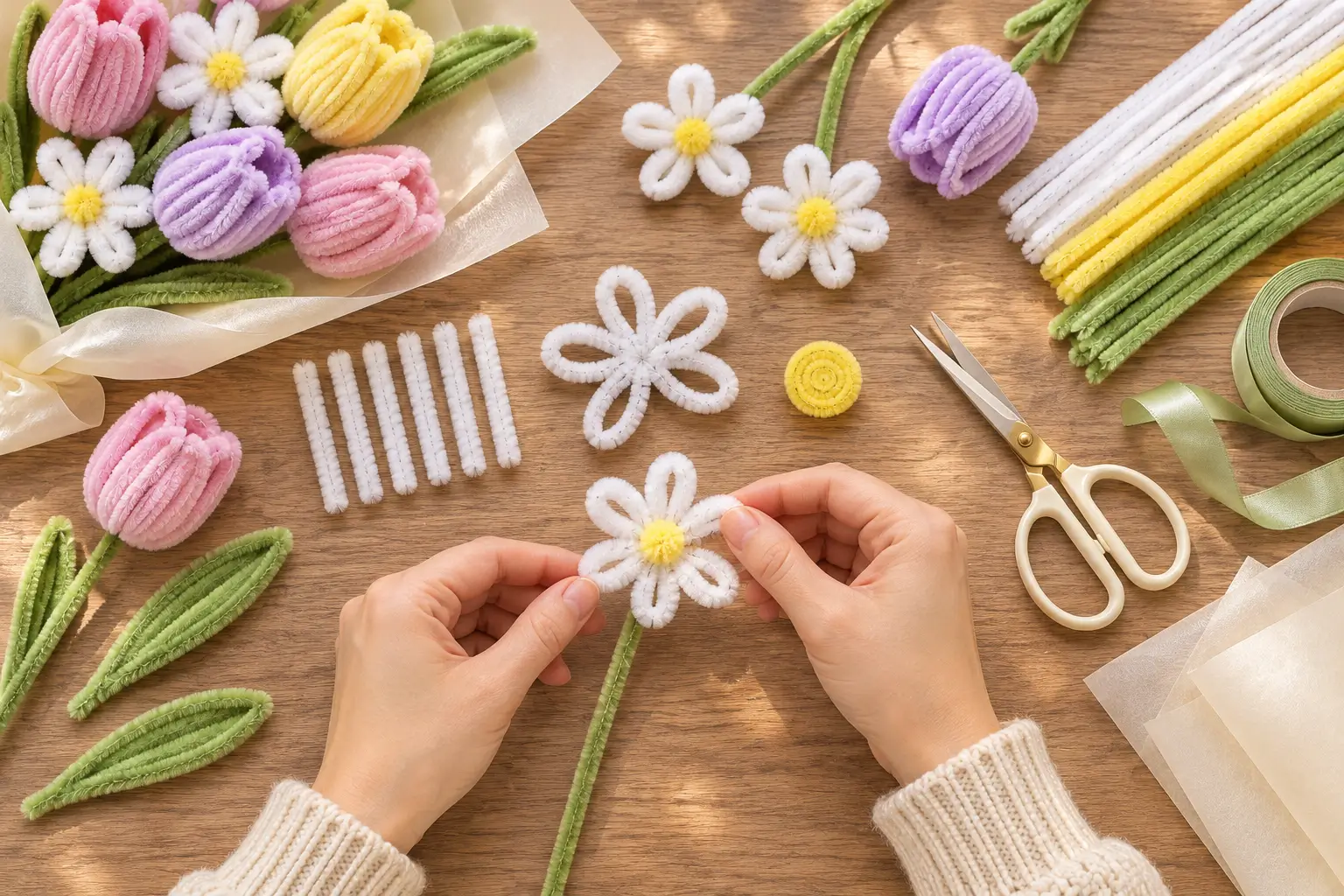
How to Make Pipe Cleaner Flowers: Easy Step-by-Step Tutorial
This beginner-friendly pipe cleaner flower bouquet tutorial shows how to make pipe cleaner flowers using simple loop petals, a coiled center and supported stems. The following five-flower arrangement is an illustrative design plan, not a claim that our editorial team physically tested it. Actual material needs vary with the size and thickness of the chenille stems.
Step 1: Gather Your Craft Materials
Prepare 15 colored chenille stems, five contrasting center stems, at least five green stems, five sturdy supports, floral tape, wire cutters and wrapping paper. Sort the stems by color. Work on a clear table and protect children from sharp cut-wire ends.
Step 2: Bend the Petal Loops
Take three same-color chenille stems for a simple daisy-like flower. Fold each into two loops, then bring the ends toward a central meeting point. Twist gently to hold six petals together. Adjust the loop lengths so they are reasonably even rather than perfectly identical.
Step 3: Create and Attach the Flower Center
Coil a short section of contrasting chenille stem into a small flat spiral. Position it above the meeting point of the six petal loops. Twist the remaining wire around the petal connections and fold or cover any exposed ends. The center should stay in place when the flower is lifted.
Step 4: Add a Strong Stem
Place a sturdy floral support below the flower head and wrap the connection with floral tape. For a large bloom, use extra support instead of relying on a thin green pipe cleaner alone. Check that the head does not tilt or rotate loosely before proceeding.
Step 5: Make Green Leaves
Shape a green chenille stem into two pointed leaf loops. Twist the leaf base around the supported stem and cover the joining point with floral tape. Repeat the flower-making process until you have five finished blooms.
Step 6: Arrange the Handmade Bouquet
Position one blossom slightly higher in the center, then place four blooms around it. Rotate the arrangement while looking for uneven gaps. Adjust the orientation and heights so the bouquet appears full but not cramped. Bind all five stems securely with floral tape.
Step 7: Wrap and Finish
Lay a sheet of matte craft or florist wrapping paper diagonally, place the bouquet in the middle, and fold the sides around the stems while leaving the fuzzy flowers visible. Fasten the paper below the flower heads and tie a ribbon over the binding. Our flower-bouquet wrapping guide and ribbon tutorial offer additional presentation ideas.
How Many Pipe Cleaner Flowers Make a Bouquet?
For a small pipe cleaner flower bouquet or gift topper, three to five handmade flowers can be enough. Five to nine flowers create a medium craft bouquet, while nine to fifteen may work for a large statement arrangement.
Treat these as design suggestions, not florist standards. Bigger chenille roses occupy more room than small loop-petal daisies; choose the count based on flower-head width, weight and wrapping dimensions. For conventional bouquets, see how many flowers are in a bouquet.
Choose the Best Pipe Cleaner Bouquet Colors
The best color palette for a pipe cleaner flower bouquet often looks more polished when it has a few coordinated shades rather than unrelated colors. Try blush, burgundy and ivory for a romantic gift; lavender, yellow and pastel pink for spring;
white and sage for a bridal-inspired look; and bright rainbow colors for playful celebrations. Repeat one shade in the ribbon or wrapping so the design feels intentional. Use a neutral wrapping sheet when the blossoms have many vivid colors.
Common Mistakes and Craft Safety
When assembling a pipe cleaner flower bouquet, tighten loose petal connections and cover sharp wire ends. If a flower head droops, reinforce its supporting stem. Avoid crowding every blossom at the same height, and check balance before wrapping. Keep chenille stems dry, away from heat and open flames.
Wire cutters, exposed wire, loose small pieces and hot glue can present hazards, especially to children; supervise craft activities and use age-appropriate materials. For safety guidance, read the American Academy of Pediatrics guide to safe arts and crafts supplies and ACMI’s explanation of certified art materials.
How to Store and Clean Chenille Flowers
Display finished flowers in a dry area away from harsh direct sunlight and high heat. Dust gently with a soft brush. Do not soak the stems: moisture may affect the fibers and some metal wire cores. If a petal becomes flattened, carefully reshape it with your fingers. Store an elaborate bouquet upright or in a loose protective box rather than compressing the flower heads.
Frequently Asked Questions
What is a pipe cleaner flower bouquet? It is a handmade arrangement of decorative flowers created from fuzzy, wire-cored chenille stems.
How do you make pipe cleaner flowers? Bend chenille stems into petal loops, secure a coiled center, attach a strong stem, and add green leaves.
How many pipe cleaners do I need for one flower? A simple six-loop daisy can use around three stems for petals plus materials for its center and leaves. Layered roses may need substantially more.
Are pipe cleaner flowers suitable for beginners? Simple daisy-shaped loops are relatively accessible; complex roses and tulips take more practice.
Can pipe cleaner bouquets be used at weddings? Yes, for decorative keepsakes and accessories, provided stem connections and balance are checked carefully.
Can chenille flowers get wet? It is best to keep them dry, as water can affect their fuzzy coating and wire cores.
Final Thoughts
A pipe cleaner flower bouquet can be a personal, colorful gift that lasts without water. Begin with a simple five-flower design, practice the petal loops and center connections, then explore roses, tulips, sunflowers and special-occasion palettes. Save your favorite ideas to Pinterest, and make your bouquet as simple or detailed as your crafting skill allows.
Editorial disclosure: All visual examples are AI-generated craft concepts. This article provides educational design guidance and does not claim that our team has personally constructed or stress-tested the example bouquets.